
WW1 Memorials


Waler Database Facebook and Angela Tiede, 2025. Image: Australian Light Horse Memorial Park Seymour
Memorials are such an important way for us to learn about and reflect upon past sacrifice in war. Recently I visited the Australian Light Horse Memorial Park in Seymour, Victoria (with Janet Lane). Highly recommended! The Park is on the site of the Seymour Camp, used for military purposes from prior to Federation until the 1960s. Photos below from the Australian War Memorial collection.
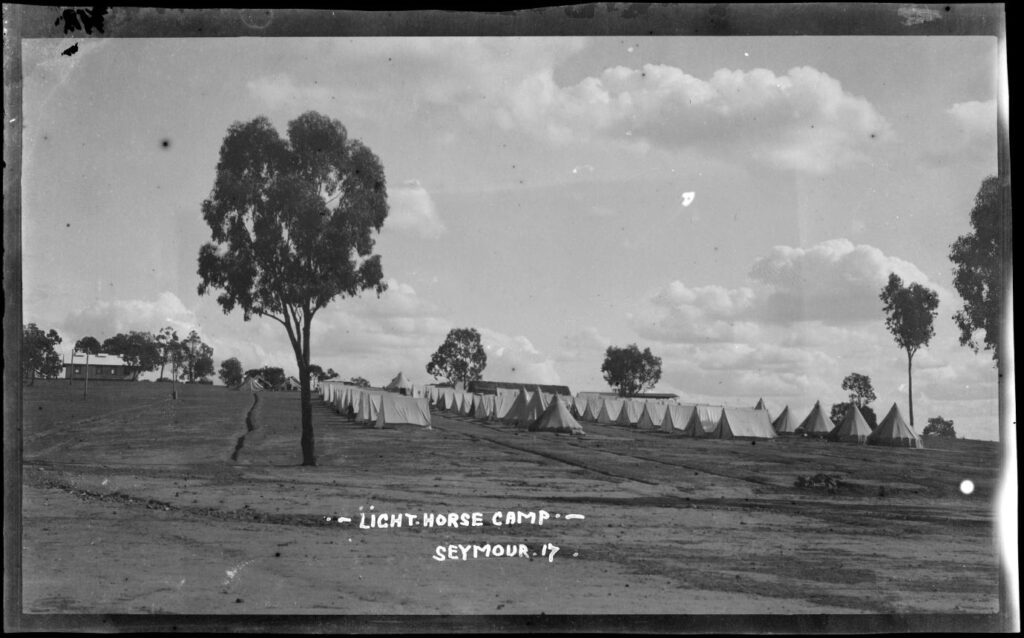
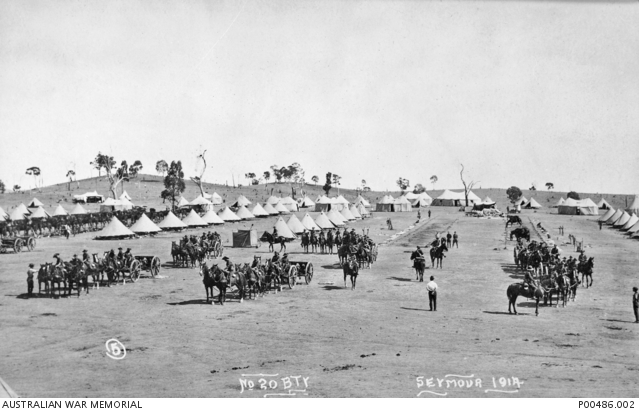
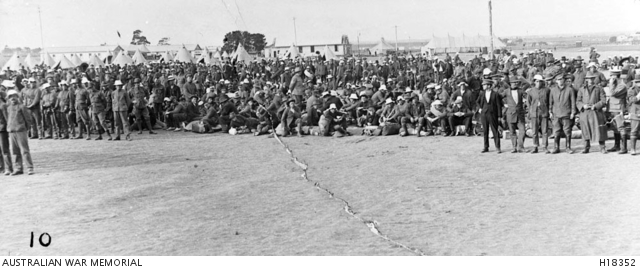
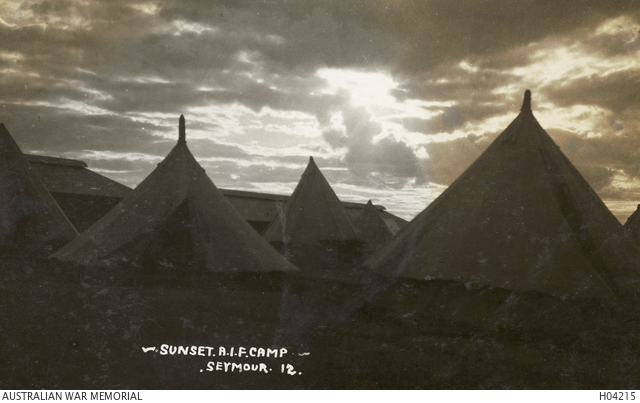
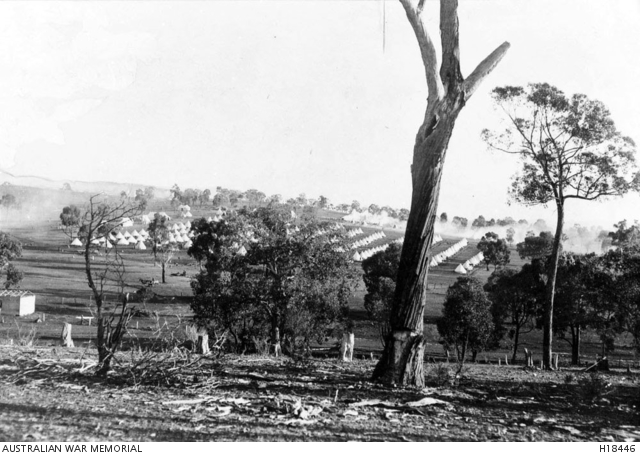
Some history from the Light Horse Memorial Park website:
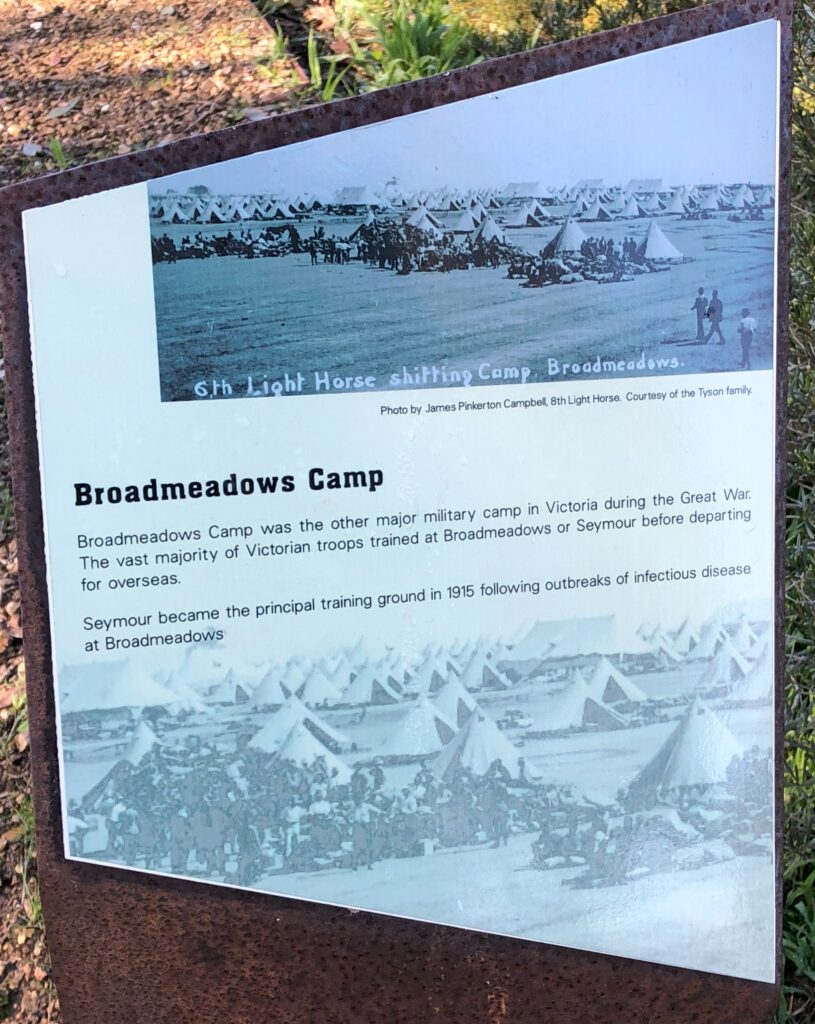
“Contemporary photos and documents of the Great War period show Seymour camp as a busy hive of military activity. Seymour Camp was used as a training, holding, isolation, and overflow camp during the build-up of the the Australian Imperial Force (AIF), and it appears that, in its role as an isolation camp, it was vital in stopping the spread of diseases such as viral Meningitis which was sweeping through camps like Broadmeadows in 1915.
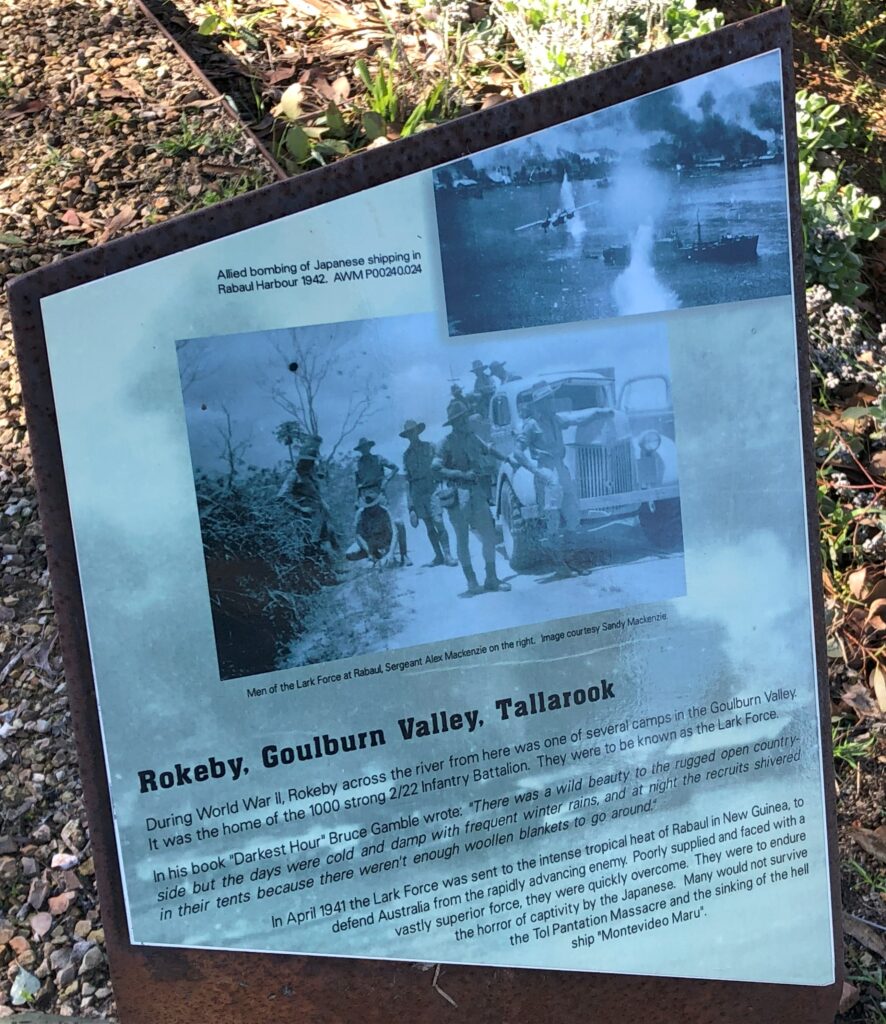
The camp was used throughout the course of the Great War for the forming and reinforcing of both Infantry Battalions, and Light Horse Regiments. Men of the 8th Light Horse Regiment became soldiers at Seymour before sacrificing themselves at the disastrous Attack on “The Nek” at Gallipoli. A Company of 30th Infantry Battalion, comprising of ex-navy sailors turned AIF soldiers gathered and trained at Seymour before sailing off for their baptism of fire in the hell of the Battle of Fromelles. Some of the Troopers who rode into history at the Charge of Beersheba in 1917, had first passed through the Seymour Camp. The entire 37th Infantry Battalion was formed at Seymour before it went onto the mud and death of Paschendaele.“
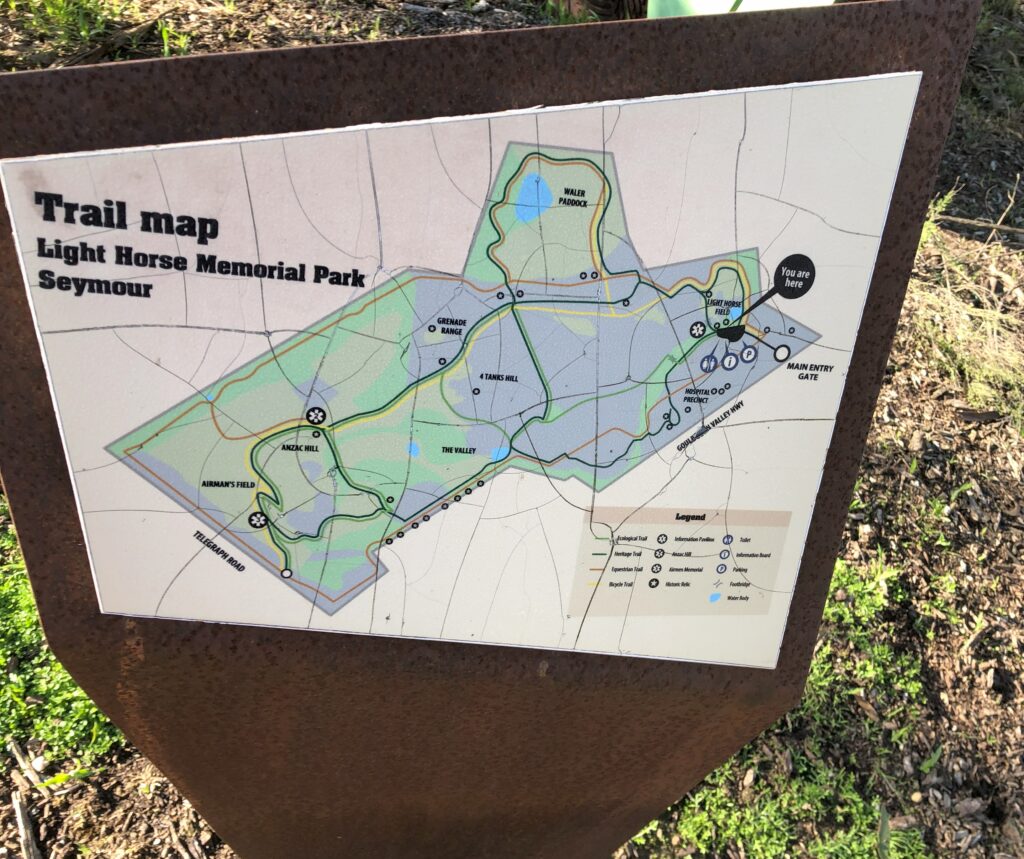
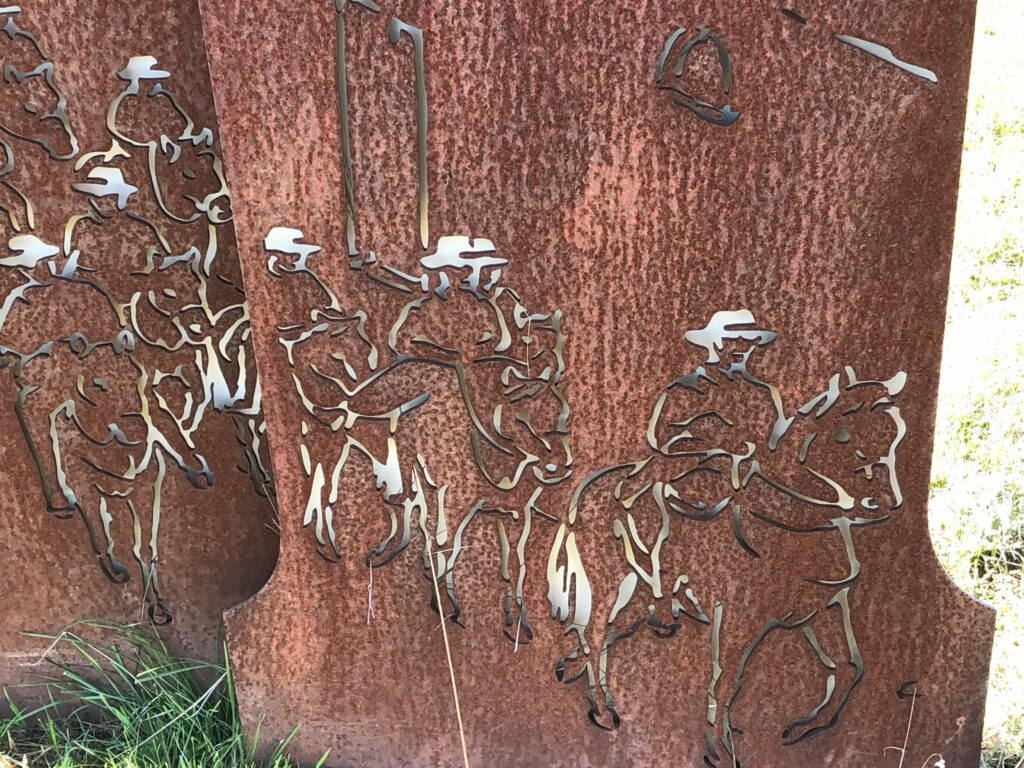
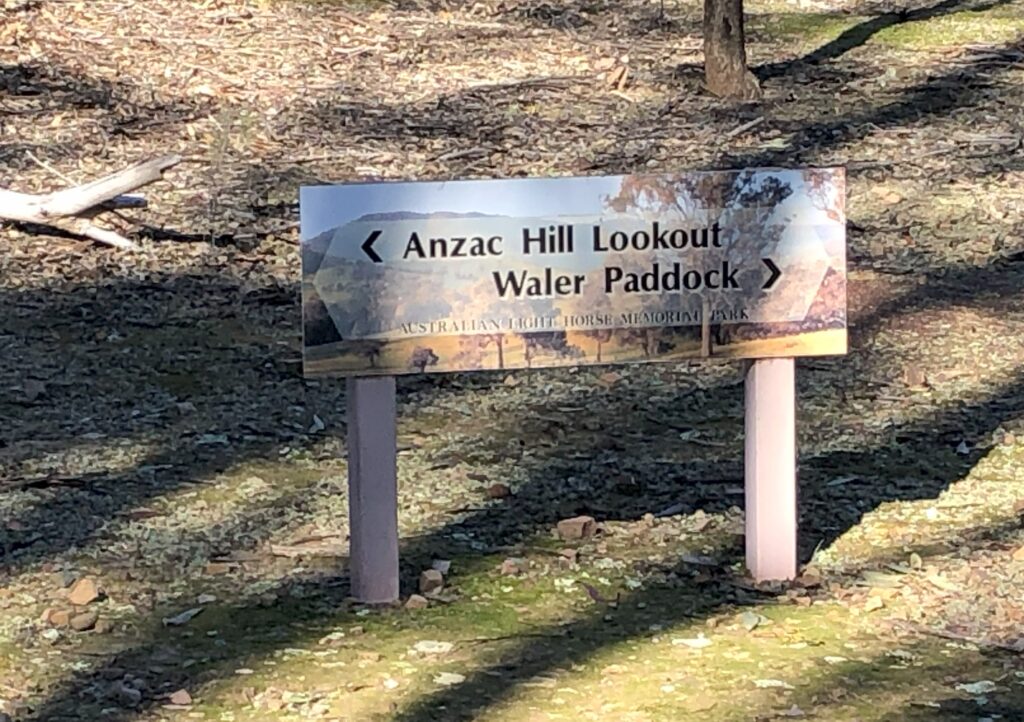
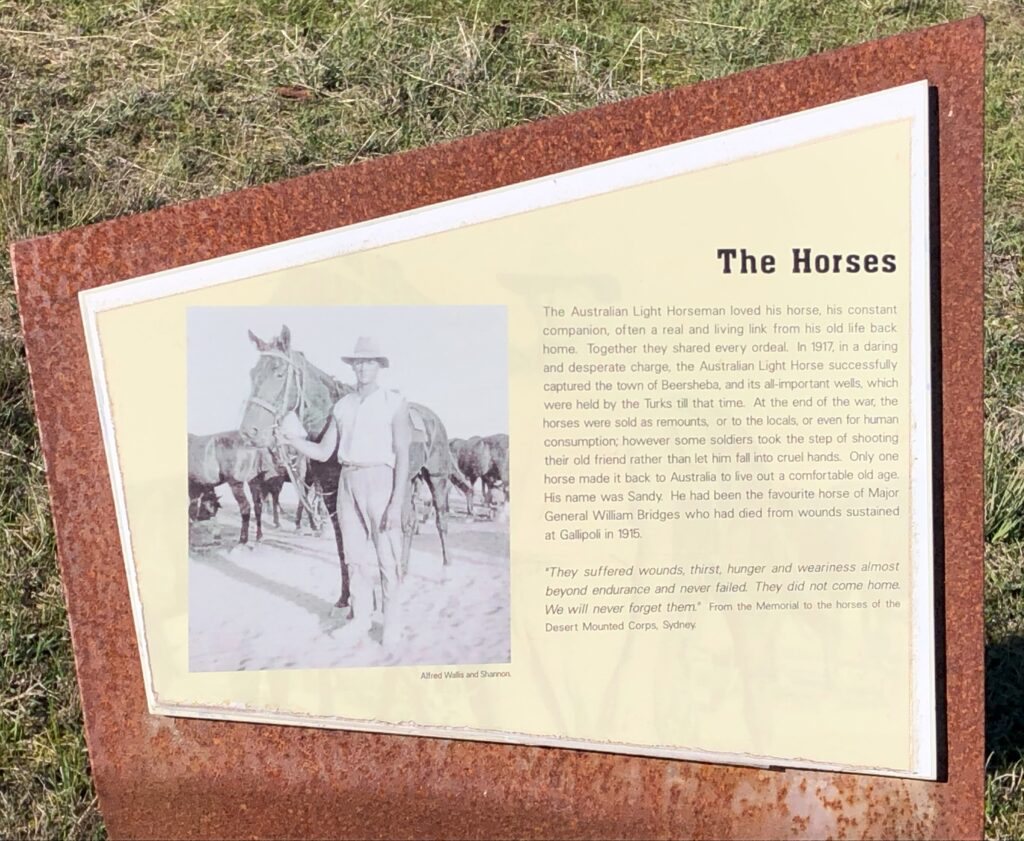
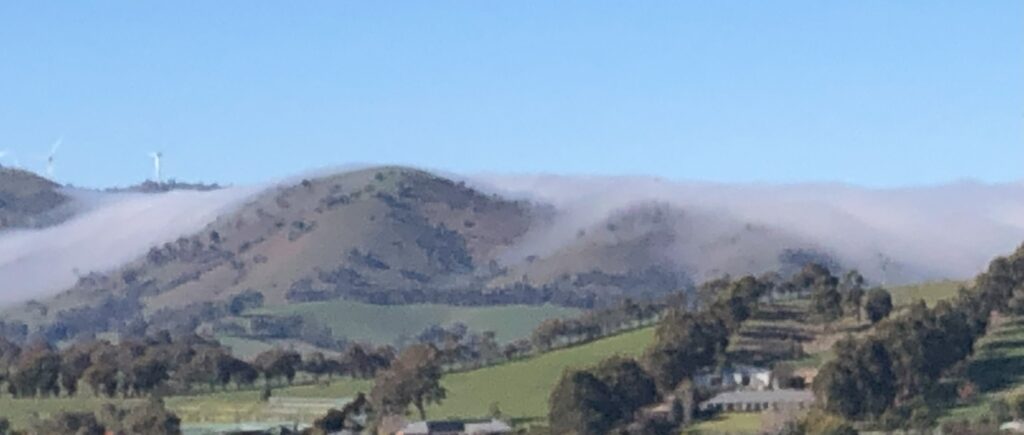
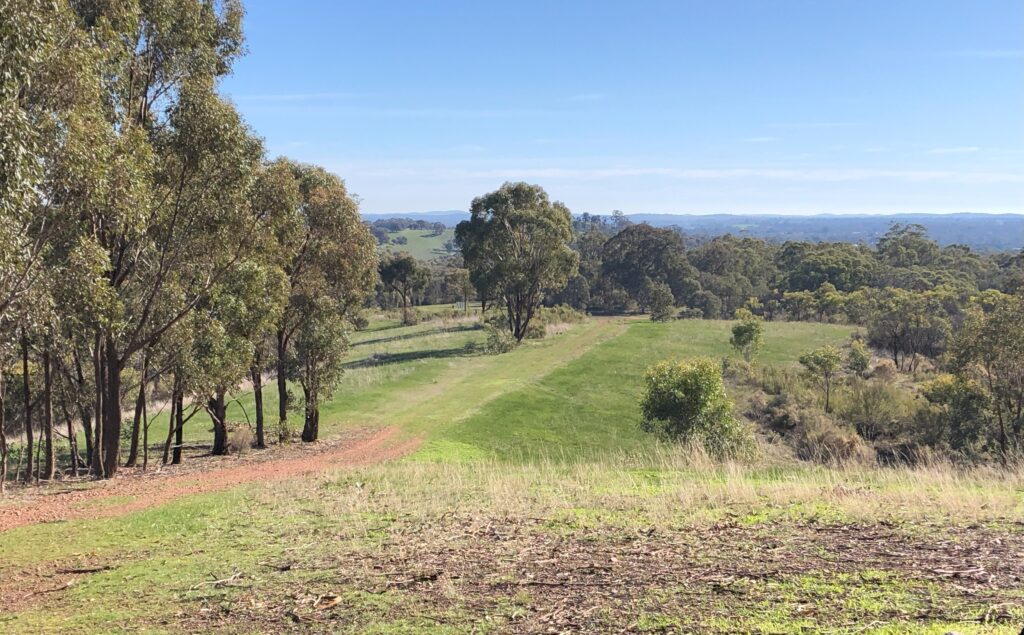
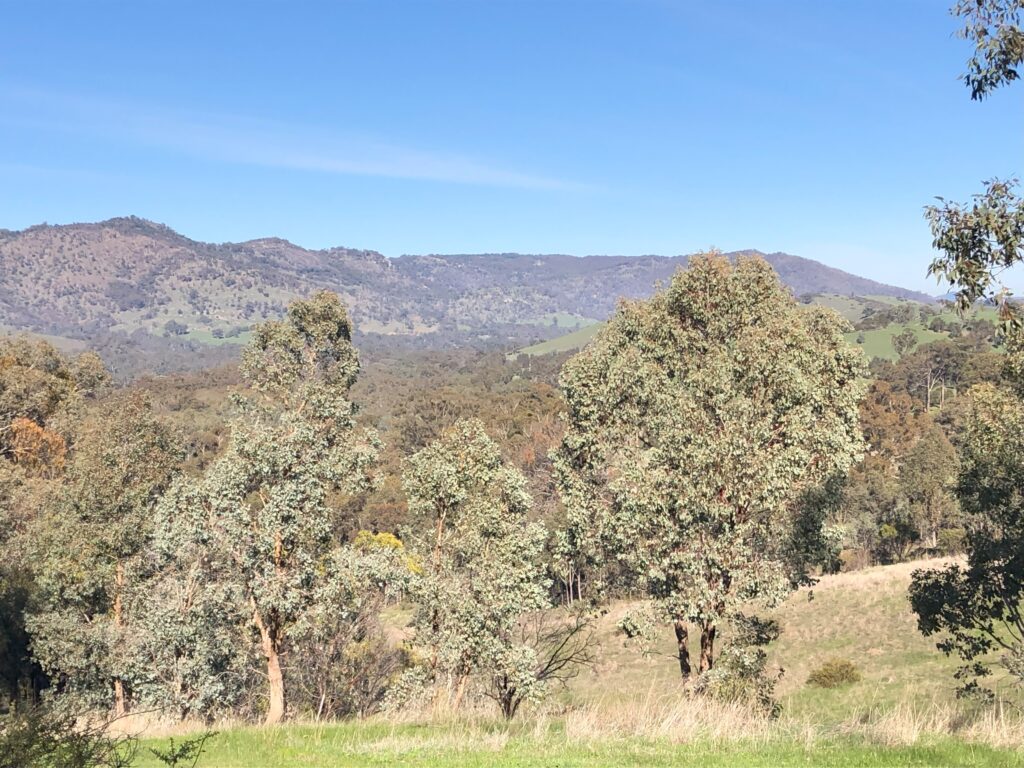
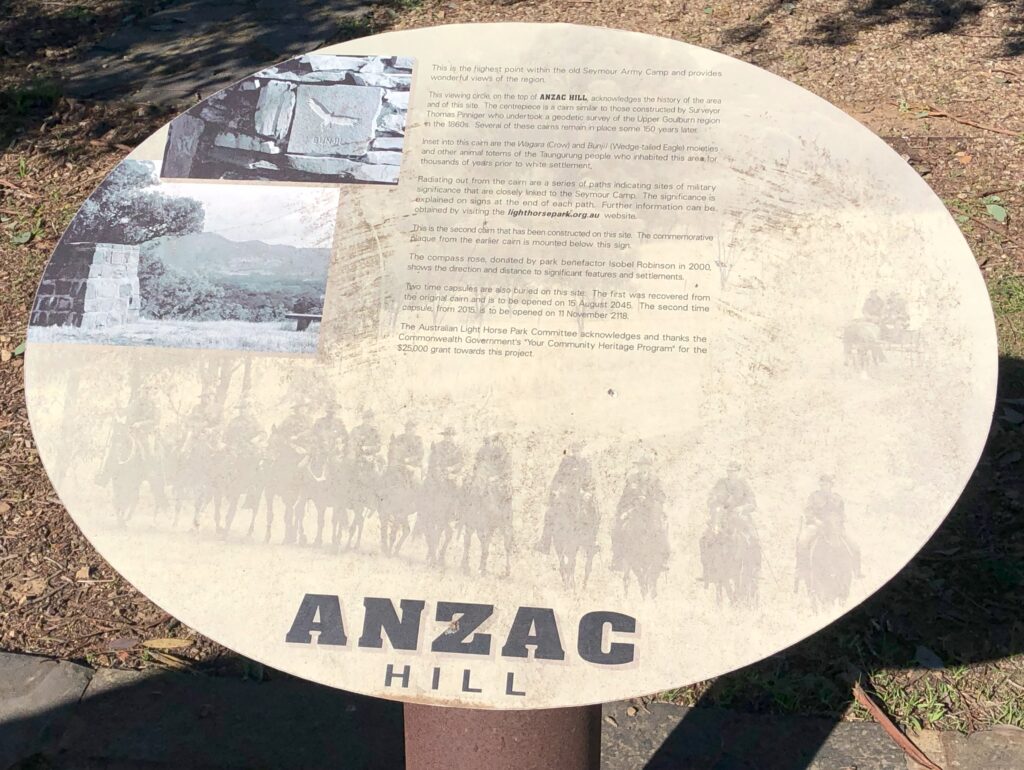
The Park has trails to follow, with comprehensive signage and information boards along the way. The walk up to ANZAC Hill is well worth it for those fit enough and with enough time to make the trip. Wonderful views of the surrounding countryside and a lot of information boards to read and reflect upon.
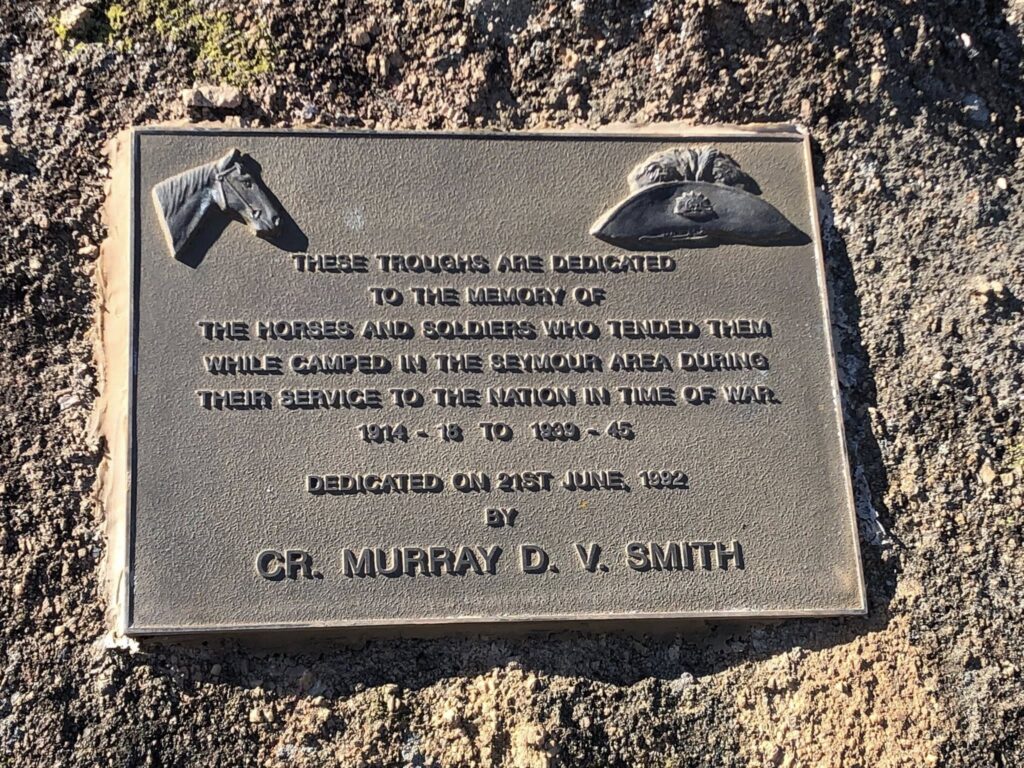
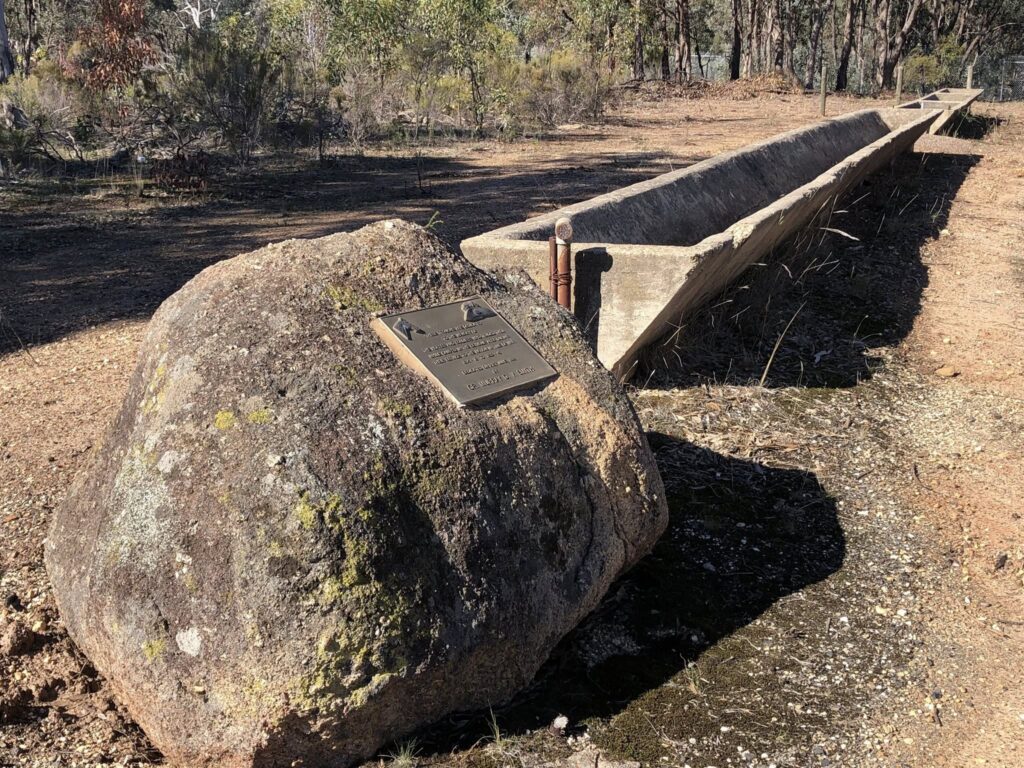
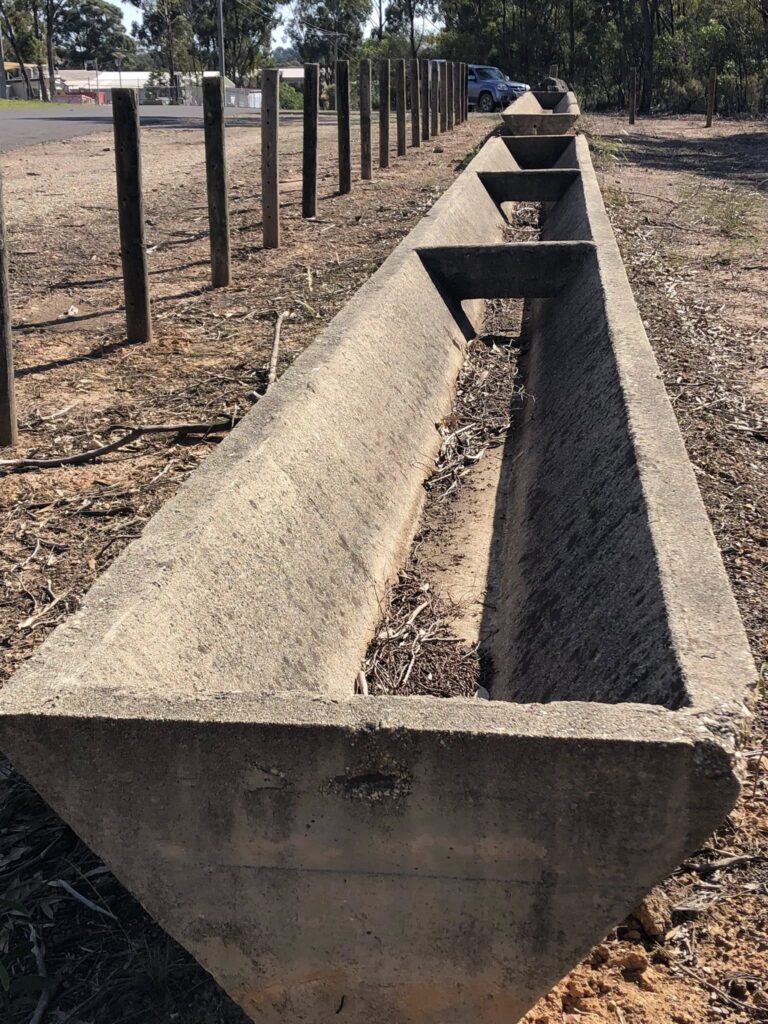
Just outside the Park in the nearby industrial estate are the original water troughs from those days. An awe inspiring and evocative sight.
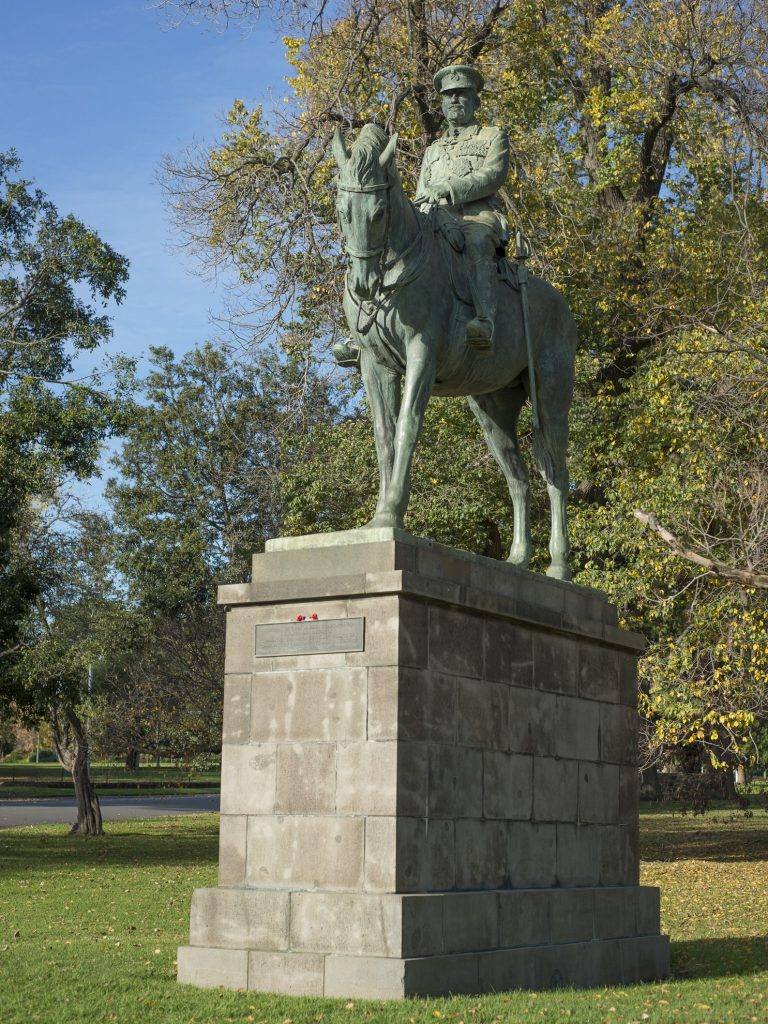
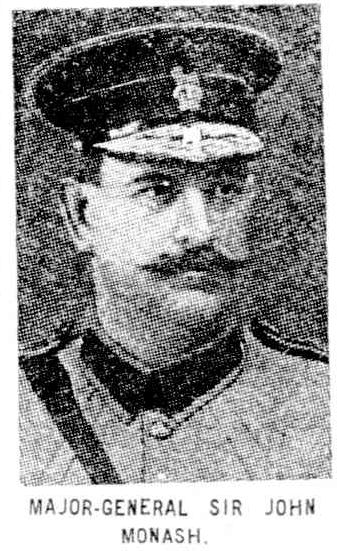
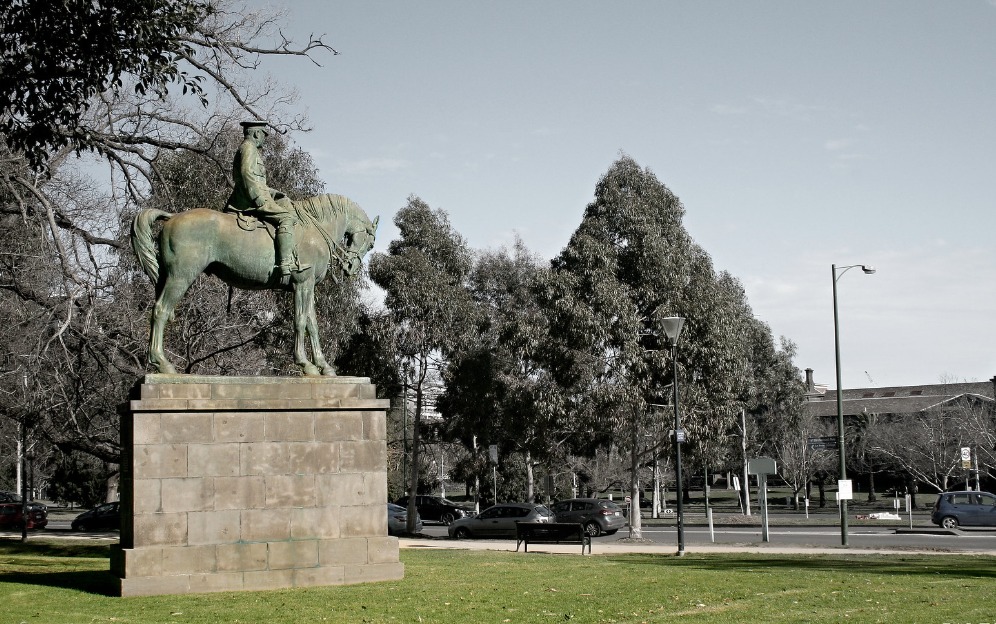
If in Melbourne, a visit to the Shrine of Remembrance is a must. Check out the Sir John Monash Statue while visiting the King’s Domain precinct.
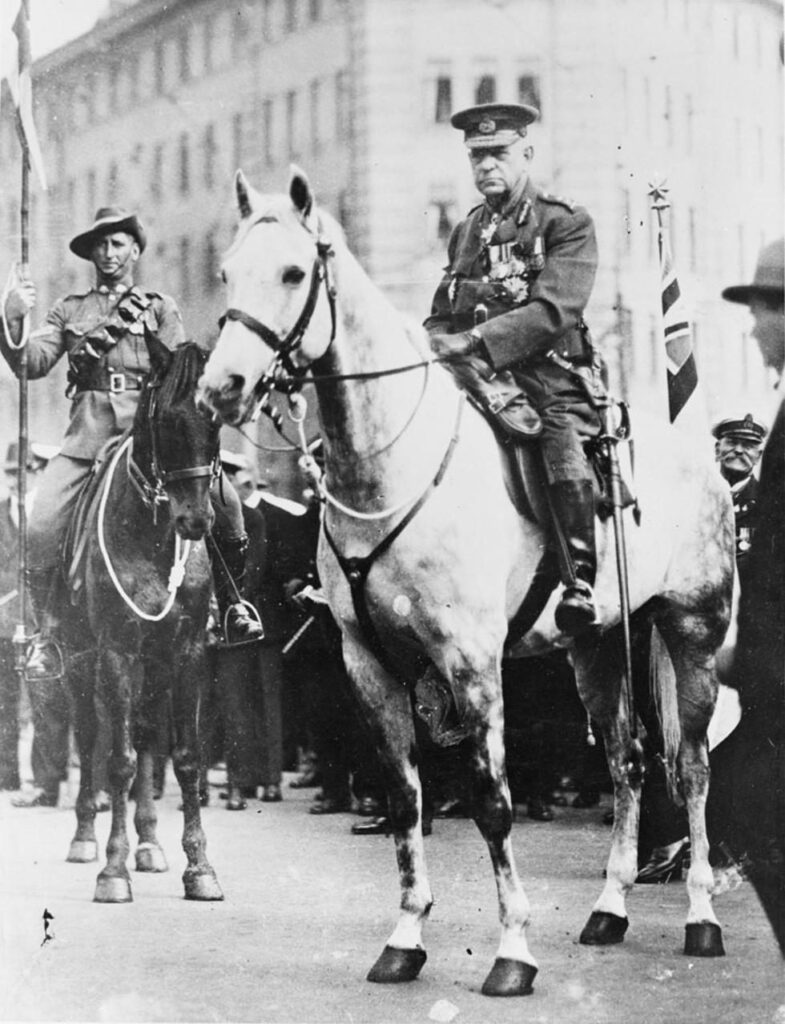
‘General Sir John Monash mounted on a dappled grey charger during an Anzac Day march. General Monash was one of Australia’s most distinguished soldiers during the First World War. During his Army career, General Monash was Colonel Commanding the 13th Infantry Brigade of the Citizen Forces, Commander of the 4th Infantry Brigade AIF at Gallipoli, Commander of the 3rd Australian Division AIF in France 1916-1918 and Commander of the Australian Corps AIF from 31 May 1918 until after the Armistice.’
Photo in Melbourne, 25th April, 1931 AWM
He died the same year, in October, 1931. Over 250,000 attended his funeral – he was hugely respected and loved
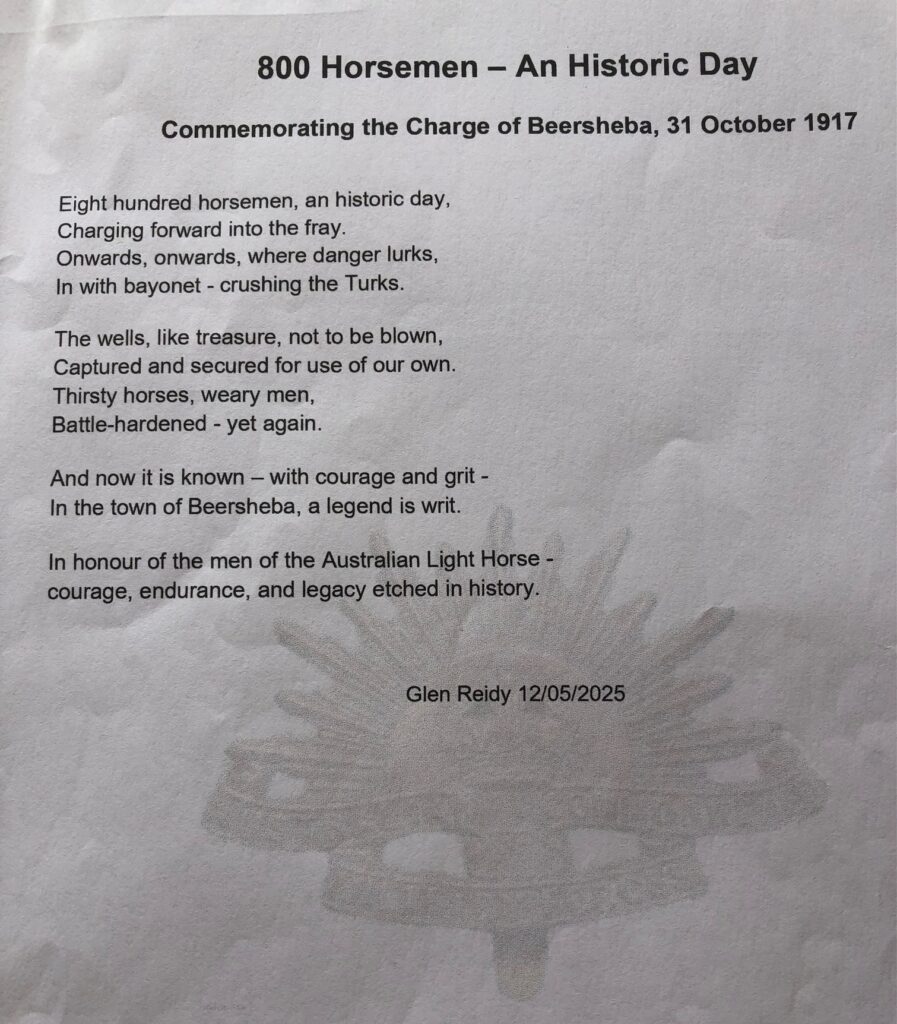
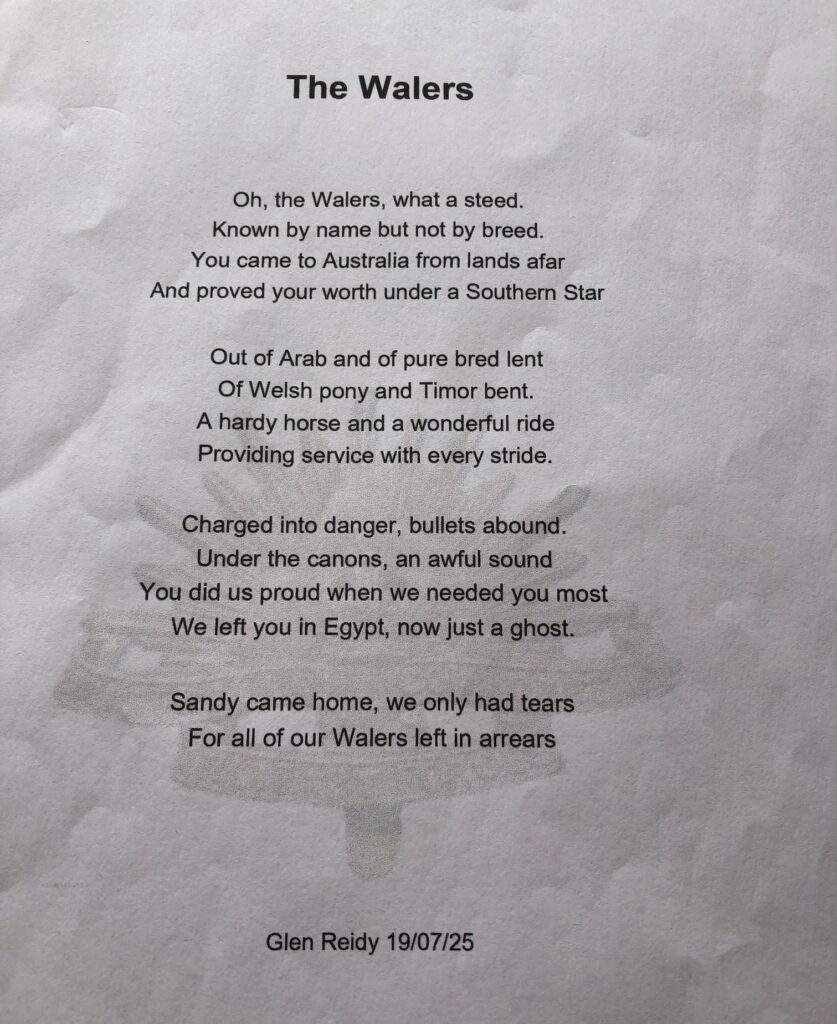
The Victorian city of Bendigo has a comprehensive Military Museum: a very thought provoking and well-presented collection with a real focus on the contribution of those from Bendigo and surrounds. Dedicated volunteers (like Glen, whose wonderful poetry appears below) provide a brief introduction to the history of the building and lay out of the displays to get you started. Allow plenty of time!
Now to overseas. No horse and not in Australia – but many would know the story of this statue of Australians in Belgium… Brothers In Arms.
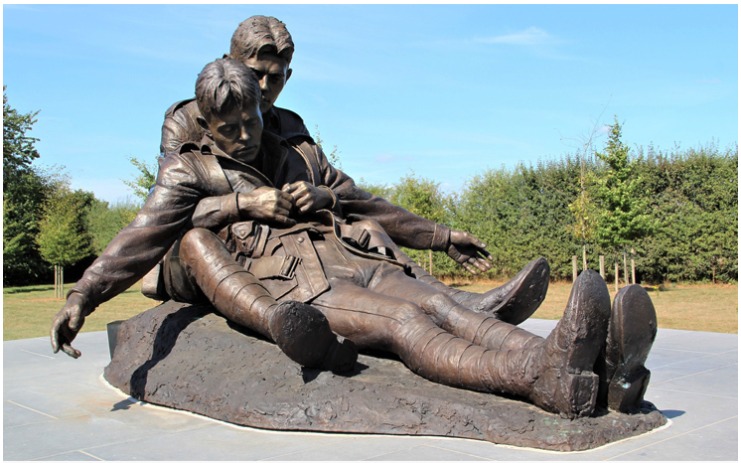
South Burnett News, November 11, 2022
In 2006 a roadworker in Belgium who was excavating a road, uncovered five bodies. He stopped work and called authorities. One body of a young man was remarkably well preserved, perhaps as the tarmac had kept it relatively dry. Not only that, unlike the others who’d also been killed in war, this body had his arms carefully folded over his chest, and was wrapped in a groundsheet.
Archeology teams came in. The bodies were Australian soldiers. Not only that, DNA from the wrapped body was taken – and a match found to Mollie Millis, Jack Hunter’s niece – the man was Jack (John) Hunter, from Nanango, Qld.
Jack had joined up with his brother Jim. When Jack was killed in the Battle for Polygon Wood at Ypres, Jim carefully laid his brother in a groundsheet and folded his arms and lovingly laid him down. He returned when safe to make a grave or bring him home to Australia but could not find his brother Jack again in the damage of war. Heartbroken, he searched and searched, even returning in 1919 to look again. It haunted Jim all his life.
‘Studio portrait of 3504 Private (Pte) John Hunter, 9th Reinforcements, 49th Battalion, of Nanango, Qld. A timber -getter prior to enlistment, Pte Hunter embarked from Sydney on HMAT Ayrshire on 24 January 1917. He was killed in action at Ypres on 26 September 1917. The bodies of five Australian soldiers were discovered in 2006 during a pipeline excavation near Westhoek, Belgium. The Australian Government and Australian Army History Unit worked with Belgian authorities to identify the remains. Two of the soldiers – 1868 Sergeant George Calder, 51st Battalion, and Private John Hunter were identified in 2007 through DNA analysis. A third soldier, 2488 Private George Richard Storey, was identified from further DNA testing in 2008. All five were interred at Buttes New British Military Cemetery, Polygon Wood, Belgium.’ AWM
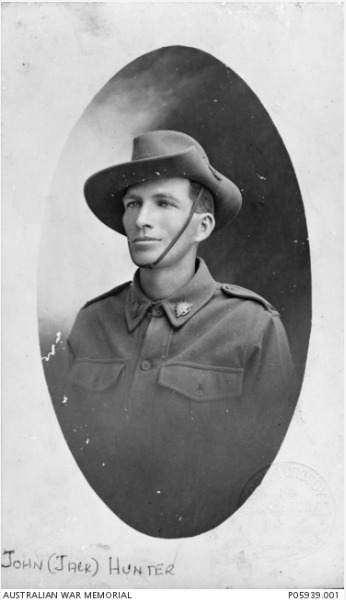
5,770 Australians were killed, missing or injured in that battle. Jack is now in a proper grave with a headstone and this wonderful statue was made. It’s in The Brothers In Arms Memorial Park, Zonnebeke, Belgium.
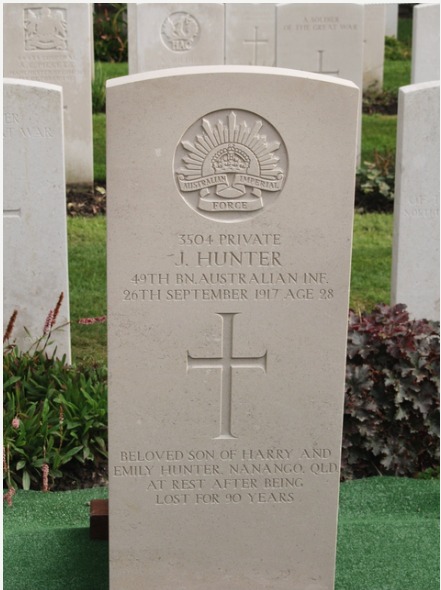
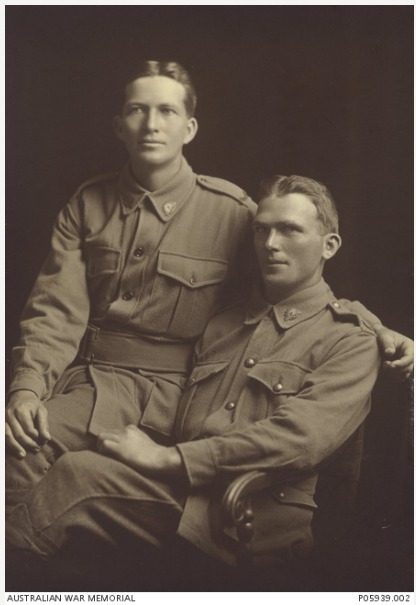
AWM Images: ‘The headstone of 3504 Private (Pte) John Hunter, 49th Battalion of Nanango, Qld, at Buttes Military Cemetery, Zonnebeke, Belgium…’; The brothers.
