
Remembering

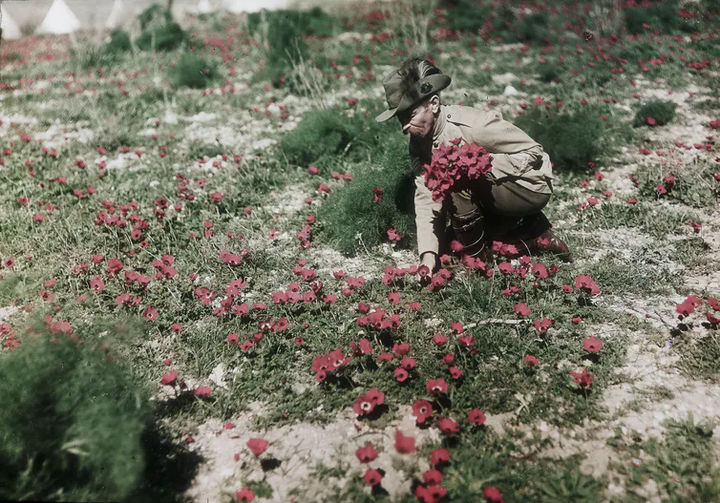
Waler Data Base @ Facebook. Image: Frank Hurley photo from 1918, Light Horseman gathering poppies, AWM. Trooper George “Pop” Redding ftom Benalla. Joined the 8th LH when he was 57 – put his age at 44. In this photo, near Belah in Palestine, 1918, he was 61.
Armistice Day until 1997, then called Remembrance Day.
The armistice was signed between the Allies and Germany in 1918 at the 11th hour of the 11th day of the 11th month to mark the end of the First World War.
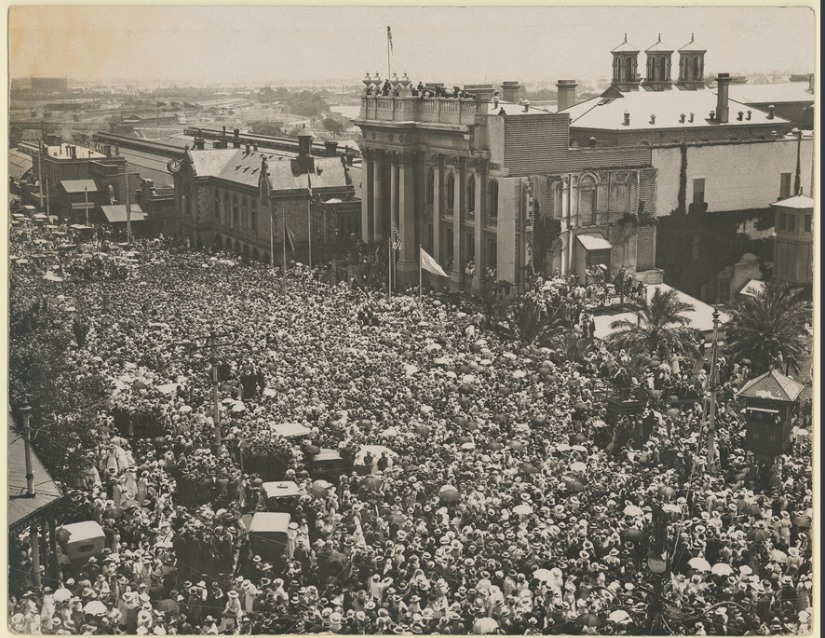
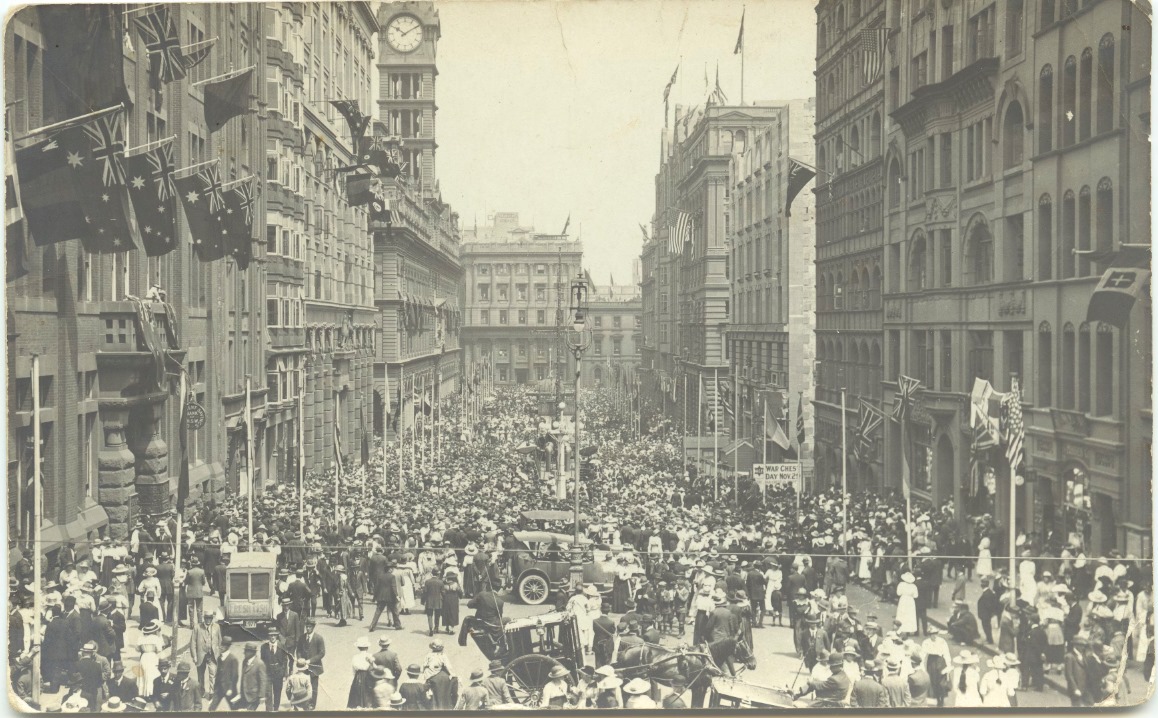
Images: A huge crowd has gathered in front of the Houses of Parliament in North Terrace to celebrate Armistice Day. 1918. Photo by John Hazard. State Library S.A; Postcard – Armistice Day, Moore Street, Sydney NSW. November 1918, Libraries Tasmania
On the first anniversary of the armistice in 1919 Australian journalist Edward Honey, working in London at the time, proposed the one minute silence at London’s Cenotaph. The tradition has been maintained ever since. Poppies came up on the fields of France and Belgium, each seemed to represent the spilling of life blood.
On the 11th hour, of the 11th day, of the 11th month, a minute’s silence…
The Ode
They shall grow not old,
as we that are left grow old;
Age shall not weary them,
nor the years condemn.
At the going down of the sun
and in the morning
We will remember them.
Response:
We will remember them,
Lest we forget.
The Ode is the 4th stanza of the poem For the Fallen by Laurence Binyon, written 1914.
During the silence we remember all who were killed in that war. Over 62,000 Australians lost their lives. Over 10 million civilians in the war affected countries. Over 9 million military people.
In total, over 8 million horses used in that war were killed…
Purple poppies now represent animals and birds which served in war. Some say War Animal Remembrance Day is now 24th February but hey Anzac Day is a good time too as we always did remember them then.
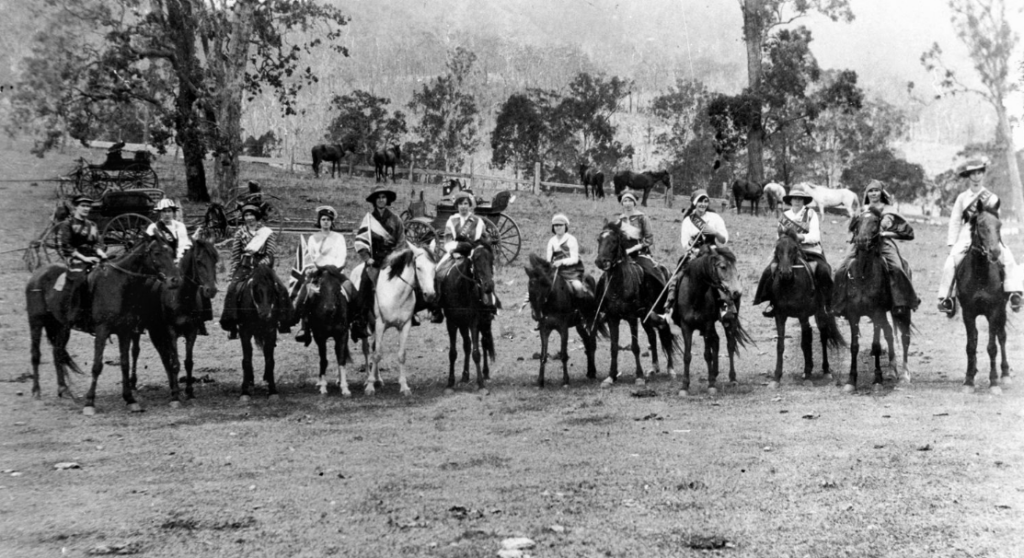
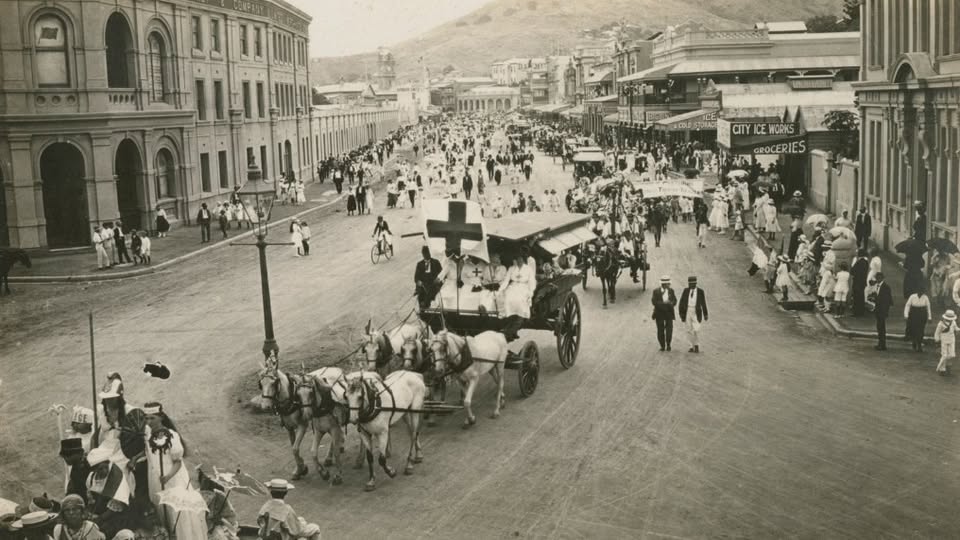
State Library of QLD images: Armistice Day Parade, Canungra, 1918; Red Cross workers in a horse-drawn carriage participating in the Armistice Day Peace Parade, Townsville, Queensland, 11 November, 1918.
In Flanders fields
In Flanders fields the poppies blow
Between the crosses, row on row,
That mark our place: and in the sky
The larks, still bravely singing, fly
Scarce heard amid the guns below.
We are the Dead. Short days ago
We lived, felt dawn, saw sunset glow,
Loved and were loved, and now we lie
In Flanders fields.
Take up our quarrel with the foe:
To you from failing hands we throw
The torch; be yours to hold it high.
If ye break faith with us who die
We shall not sleep, though poppies grow
In Flanders fields.
John McCrae (1872–1918). Canadian soldier, poet, who was killed in that war.
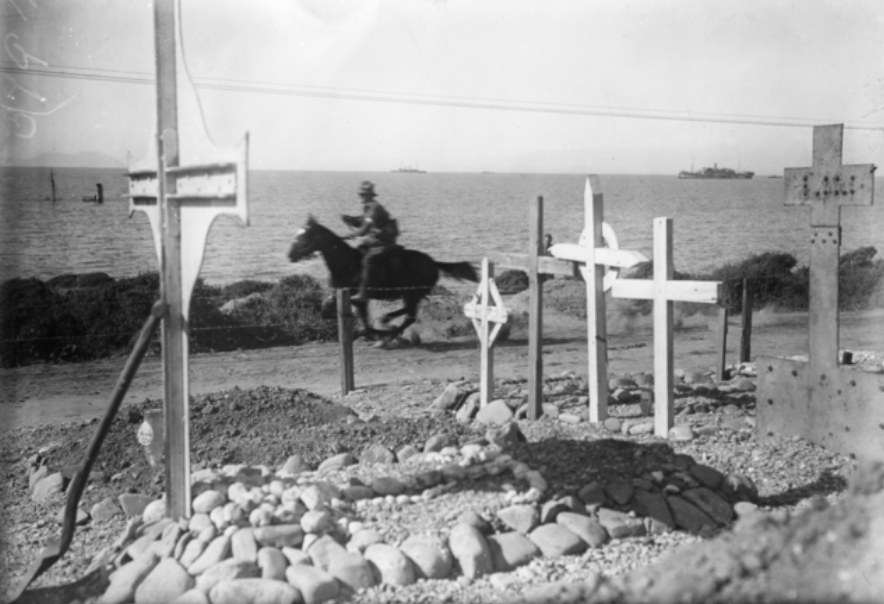
‘A despatch rider galloping from Suvla Bay to Anzac Cove to avoid being sniped at. Great risk was run by these men in carrying out their very important duties. The rider is possibly 852 Private (Pte) Stirling Fritz Blacket, who enlisted in the 2nd Light Horse on 19 December 1914. After being wounded at Gallipoli in August 1915, Pte Blacket returned as a despatch rider to Suvla Bay in September.
In an interview with his grandson in later life, he described the taking of a photograph of either himself or his fellow despatch rider on the Gallipoli Peninsula. ‘I distinctly remember the time the photographer got permission to take the photo. He had a valuable camera and valued himself. It was hard to take photos in a safe place to avoid you or the photographer getting shot up. The place I suggested was a quiet little beach on Anzac Cove, with just a couple of graves there. I told this photographer that one of us would ride around there so he could take photos. That goes down well with the public when they see someone galloping around. So we did a canter around for him while we were sitting upright on the horse and he took these photos. We couldn’t ride fast as there was a lot of traffic. When despatch riding we would crouch over the neck of the horse to avoid getting shot.’ Pte Blacket continued to serve in the Light Horse, and was awarded a Military Medal, for his part in the capture of seven Turks near Khor El Ajham on 21 July 1917. He was also commended for his work as a despatch rider at Gallipoli and in the Middle East.’ AWM
“This is my Uncle Trooper Sloan Bolton who fought at Beersheba and was the soldier who stopped the Turks from blowing up the water wells. Unfortunately, Sloan lost both his legs in a later fight. He came back to Australia and with his wife started a dairy farm which they ran together. I was only a child but remember him struggling around on his huge wooden legs.” Jen
Jen says Sloan ran a dairy farm and bred Welsh Mountain ponies after the war, and was a truly good man – her family holidayed on his farm.
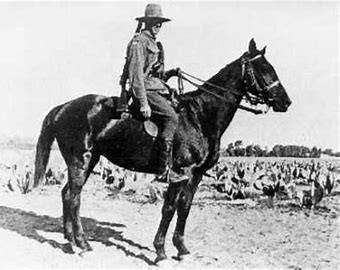
There have been some good articles written about this extraordinarily brave man – clippings and links in post. Sloan migrated from Ireland in 1913, alone, aged 18 years. He gained work as an engine driver, then war broke out. He joined up, going into the 4th Light Horse, in 4th Reinforcements.
He served in Egypt, Gallipoli and the Middle East. He was ill several times including with malaria but always returned to duty. At the charge of Beersheba, Sloan felt his beloved horse Monty (described in several articles as a Waler and yes he looks one indeed) almost fall. Not until they got there did he find Monty had been gouged through the rump by a bullet.
He and Monty dashed into Beersheba, knowing water was critical. Sloan Bolton was the man who saw a German officer about to detonate the wells – dashed up, pointed his revolver, and ordered him to surrender. The officer wisely did. He was given over to another’s care and Sloan charged on, finding another German officer and some Turks escaping with horse team and artillery gun. He raced up, revolver pointed, and ordered the officer to surrender. He refused. Sloan knocked him out with a blow to the head. He took many captives. None knew he’d run out of ammo!
The water was saved, and the big guns captured. In a later clash at Es Salt and Amman, on 3rd May, 1918, Sloan’s legs were blown off by a shell. He was sent back to Australia in 1918.
In hospital here, more problems – gangrene meant further amputation of what was left of his legs. He fell in love with a friend, Elsie, who came to see him in hospital – which strengthened his resolve not to give up. He was the only amputee to walk out of that hospital, on prosthetic legs.
Sloan and Elsie ran a farm near Geelong and bred Welsh ponies and Jersey cattle – he won Champion Jersey Bull at the 1934 Melbourne Show.
Sadly, in 1947, aged only 53, Sloan passed away. Six months later tragedy struck when Elsie’s home was burned down and all was lost – including his medals. She asked the Australian Army to replace them – they refused.
When Queen Elizabeth was due to visit Australia in 1970, a ten year old granddaughter wrote and asked her if Her Majesty could get the medals replaced please? The Queen did. In July 1918 Sloan Bolton had been awarded the Distinguished Conduct Medal (DCM) for his actions at Beersheba (now the Conspicuous Gallantry Medal.)
What happened to his horse Monty? One can only imagine, and that Sloan always thought of him. References to his diary showed Sloan liked to talk to Monty, they had a close bond; Monty instantly recognised him and nickered when he got out of hospital after his illnesses and wounds at the war, despite many other men in similar uniforms about.
Dear Elsie lived to 94, passing away in 1990. Sloan’s daughter Margaret Grant wrote a little book about them, titled “A Rich Heritage, A Story of Courage and Victory. Elsie and Sloan Bolton, DCM.” Published in the early 2000’s, it’s very hard to find.
Trooper Sloan Bolton was part of the story of The Lighthorsemen film. His nickname was Scotty, probably because he had an accent – Irish – but some thought it was Scottish. Included a clipping using his nickname, as Jen wondered why he was called Scotty in the film, transpires it was always his nickname here.
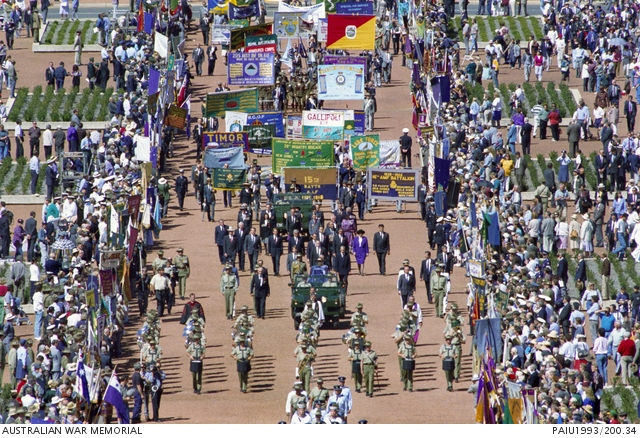
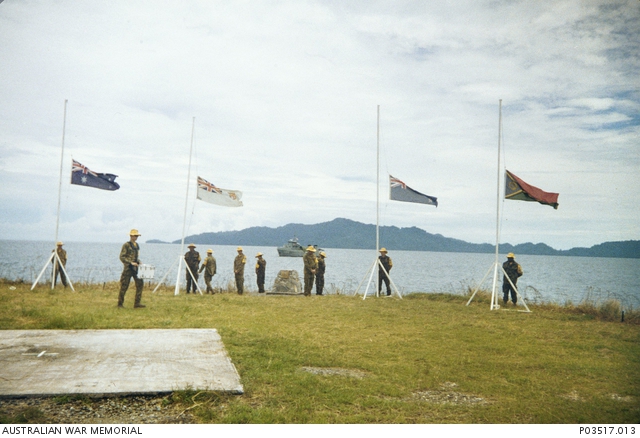
AWM images: The entombment of the Unknown Soldier at the Australian War Memorial on Remembrance Day in 1993; Members of the Peace Monitoring Group (PMG) participate in a Remembrance Day parade, 2001. There was one national representive from each of the countries participating in the PMG as flag orderlies.
