
Horses at Work

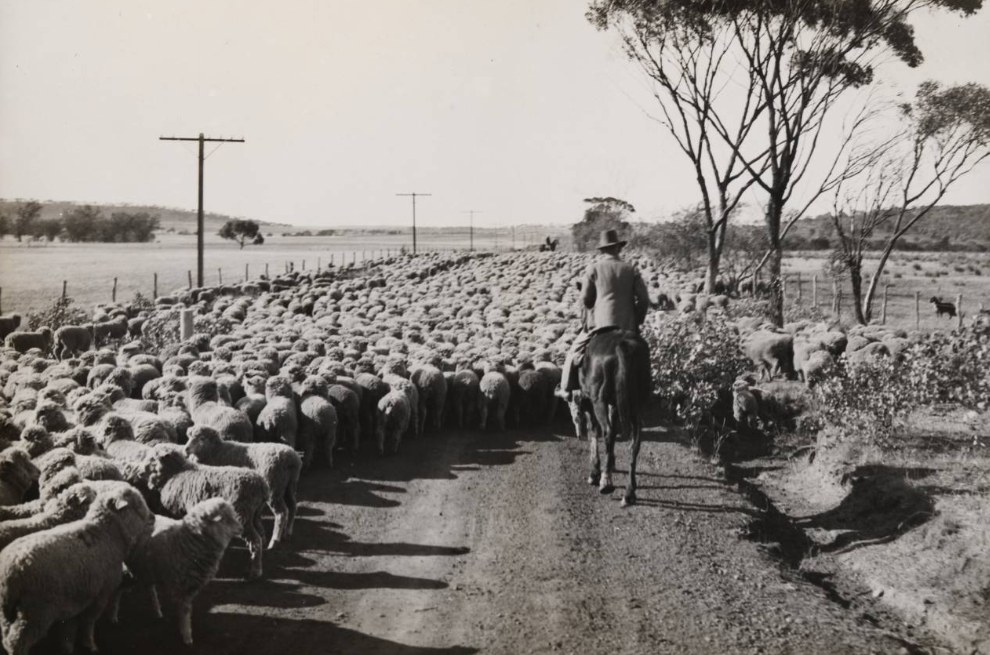
Waler Data Base @ Facebook: Image: 2500 sheep being driven on a road near Moora, June 1936. State Library W.A.
Working horses, where would we have been without them! Let’s take time to remember how much we depended on them to develop our nation by looking at this broad selection of photographs depicting so many different work environments. What a great window into the past, much loved by our FB followers who regularly share knowledge and personal photographs of horses at work with us.
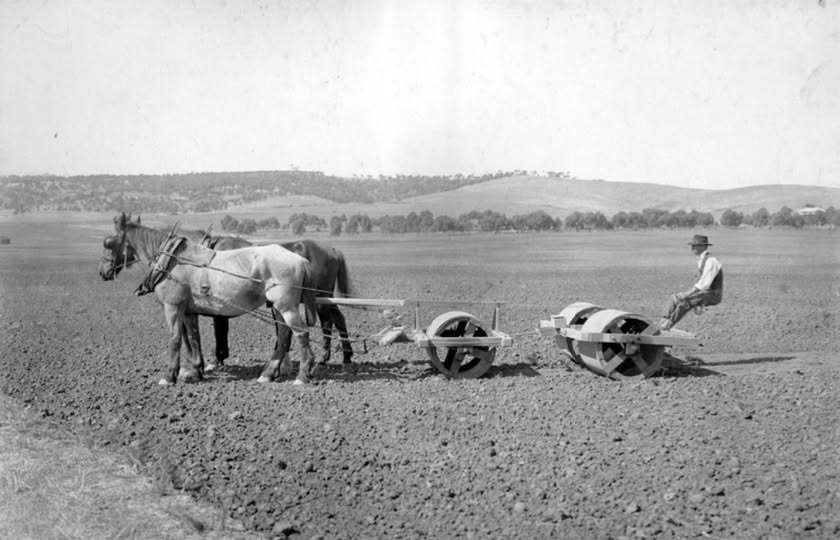
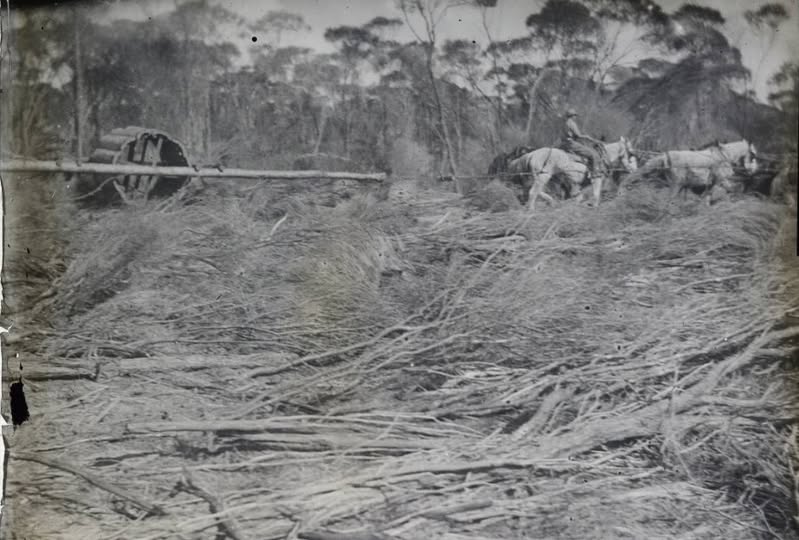
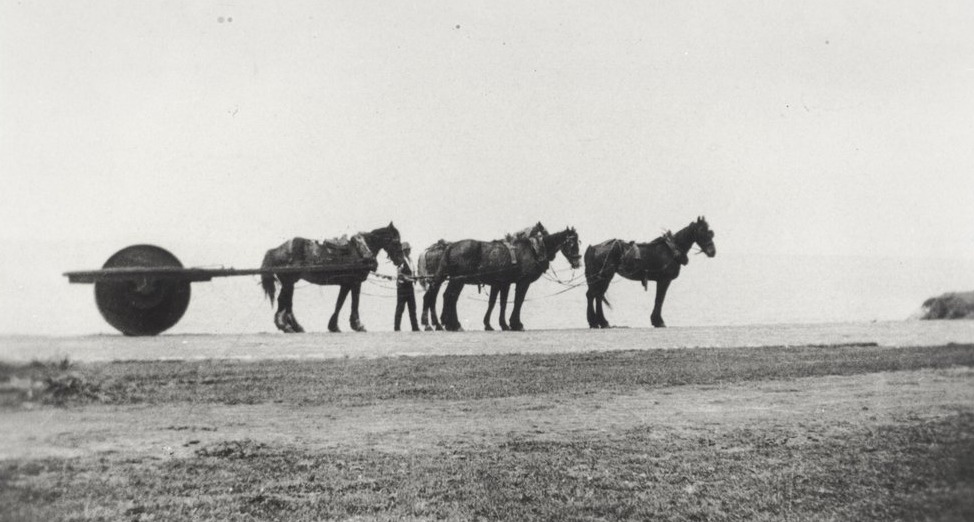
Images: Richard Albert Ragless working with a horse drawn roller on a farm at St. Mary’s; the hills of Pasadena are in the background. 1907. State Library S.A.; Clearing land with horse-drawn roller, approximately 1912. State Library WA
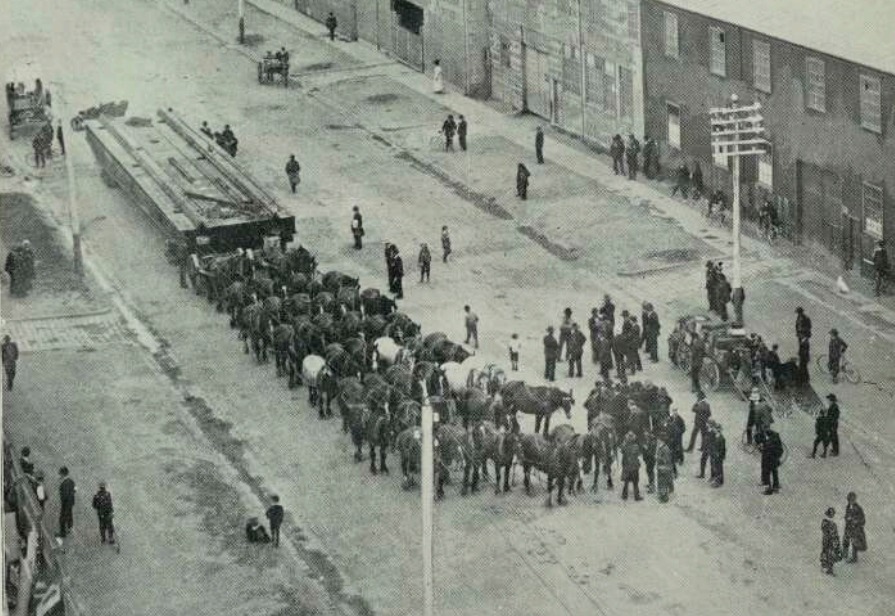
A portion of the Swanston Street Railway Bridge being taken to the construction site from a foundry in South Melbourne – a girder to span the railway lines. At the time, the largest amount of steel amassed in Australia was used. A special steel trolley was made, with 8 wheels, each 3 feet in the tyre. The load was 16 feet wide and 74 and a half feet wide.
Dorman, Long & Co. had the contract for making the girders, working with Vic. Railways and various govt authorities. *Number given is exaggerated; probably 42 horses used, or 48, or 44.

A small crowd gathered to watch the start of this massive enterprise, and there were frequent stops to give the horses a rest. The transport took all one Saturday afternoon and most of the night. Can’t find whose horses they were sorry, will add if found. Possibly belonged to the foundry, most kept a team or more
In the 1860’s forty horses were used to pull a large block of granite for the Burke & Wills Memorial in Melbourne, thought to be the biggest team used in the city previously.

Northern Beaches Council, Library Services
Arthur Larkin and his horses, of Narrabeen, a beach suburb of Sydney. Known for its beautiful rock pools, made by Arthur.
Arthur Larkin with horse, Captain at Collaroy. Arthur Larkin with his beloved horse Captain. 1924. Larkin had a team of horses stabled at his house in Wetherill Street Collaroy that were used for road building.
Northern Beaches Council, Library Services
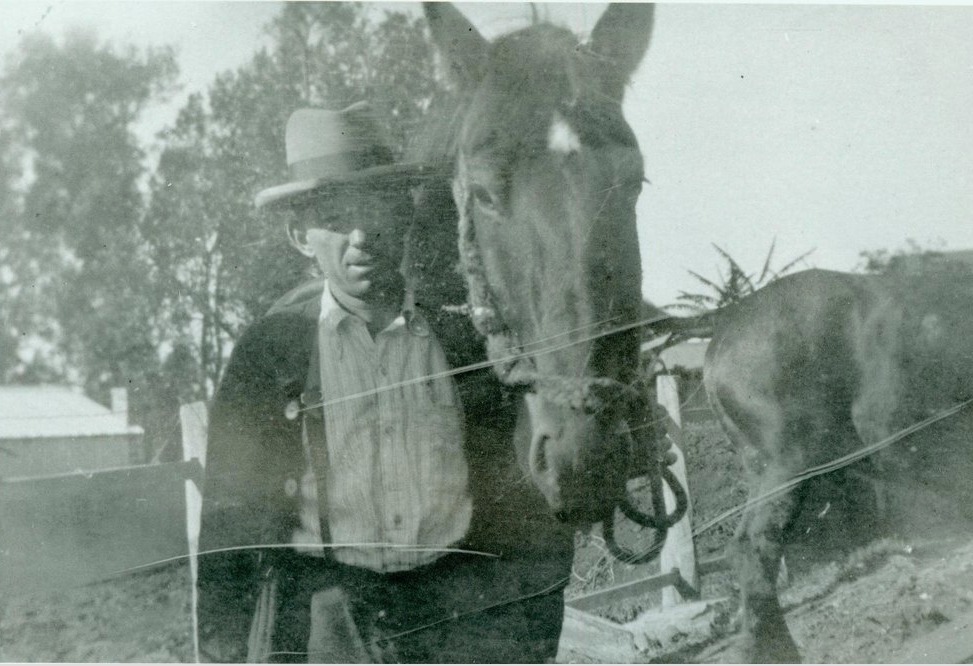
Arthur grew up with work horses, his father Isaac had an orchard and farm which became known as The Pines. Arthur, soon as he was old enough, got government contracts for carting gravel and rock, and for road making with his horses.
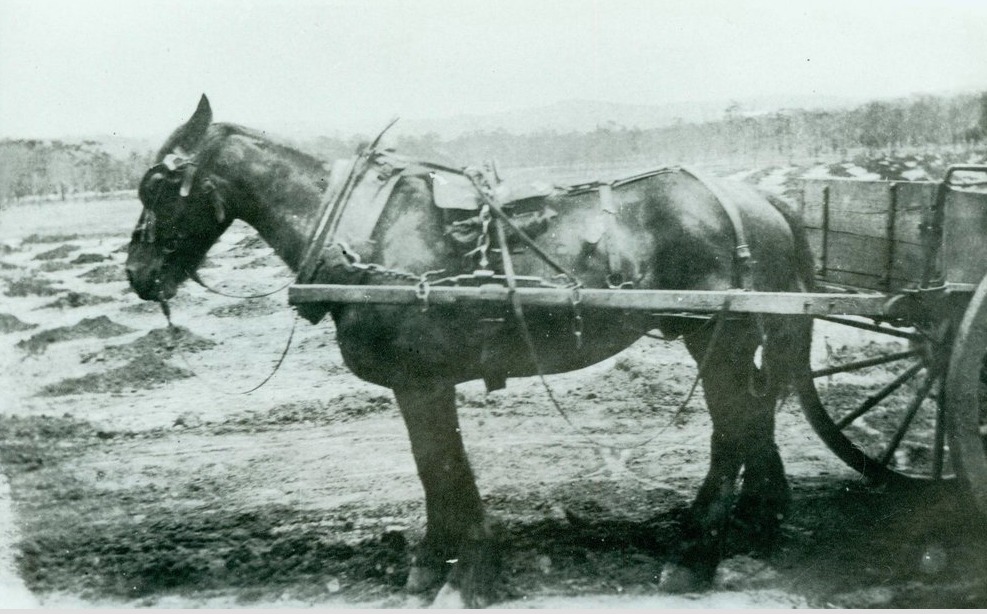

Images from Northern Beaches Council, Library Services: Filling in the playground at the back of the Narrabeen Public School. Arthur Larkin’s horse. Now Narrabeen Lakes Public School. Undated; Bridge across Narrabeen Lagoon. 1927. Built by Arthur Larkin and team. Arthur Larkin can be seen with his horse and cart* on the causeway. This is the Ocean Street Bridge.
Northern Beaches Council, Library Services
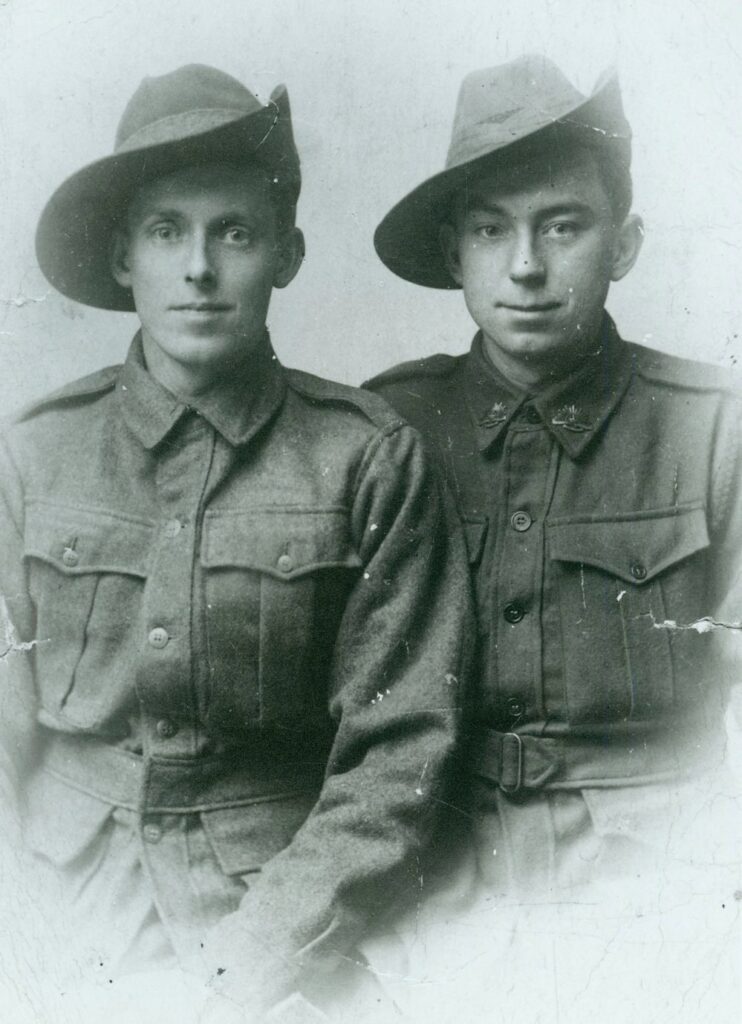
Arthur joined up in WW1. He made it through. Arthur George Larkin was reported injured in June 1919 so was possibly in Egypt for the uprising at that stage, not sure sorry. After returning home he continued contracting for roads, bridges, jetties and more – all using his horses – which were always beautifully cared for. Robert lost a leg in the war, undaunted he started up a car hire service after he returned home.
‘Bob and Arthur Larkin. 1916. Arthur Larkin was Olga Johnson’s father. He married Olive Ware in 1923 when he returned from the war. He drove a team of horses building roads on the Northern Beaches.’ Northern Beaches Council, Library Services
Lots of other Larkins with horses too, a good horsey clan!
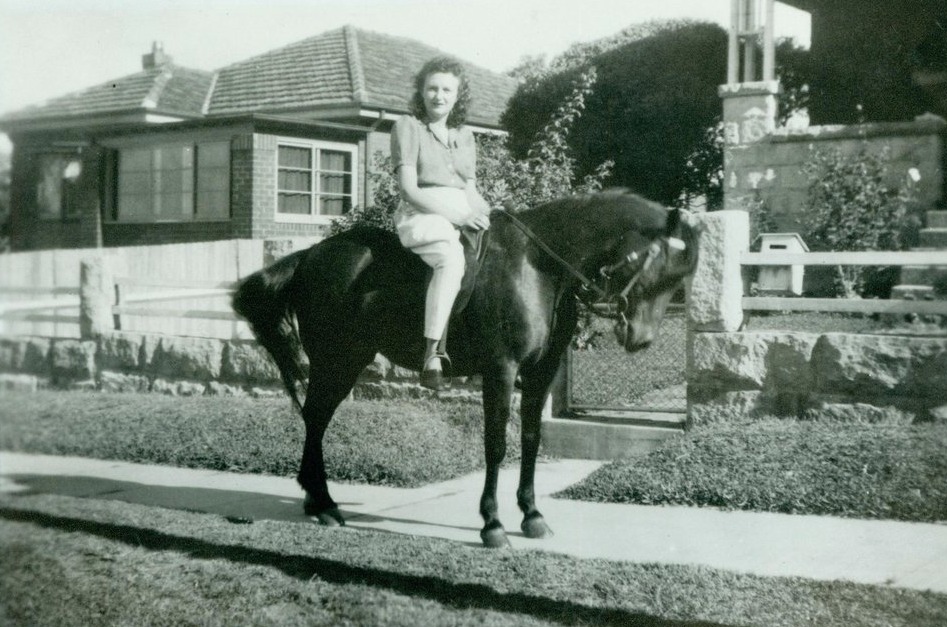
‘Olga Larkin on horse outside 20 Wetherill Street, Narrabeen. 1946. Olga Larkin (married name Johnson) on her horse outside their home at 20 (then 28) Wetherill Street, Narrabeen. Olga was the daughter of Arthur and Olive Larkin. Arthur Larkin ran a team of horses involved in road building. Olga passed away in 2009.’ Northern Beaches Council, Library Services. It was Olga who kindly donated many family photos to the local library, for all to enjoy.
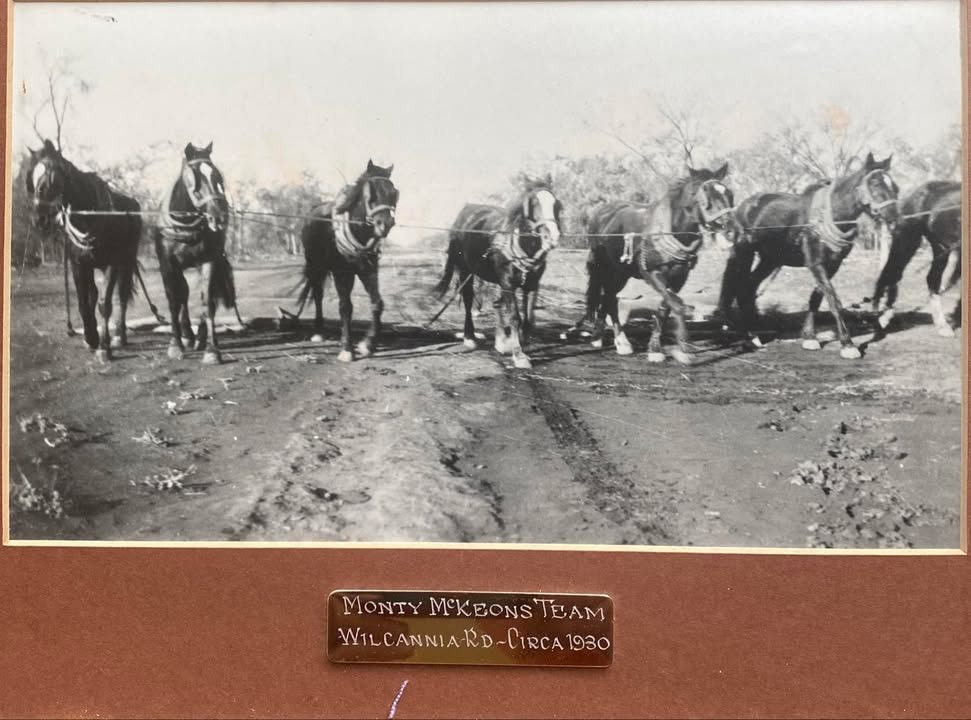
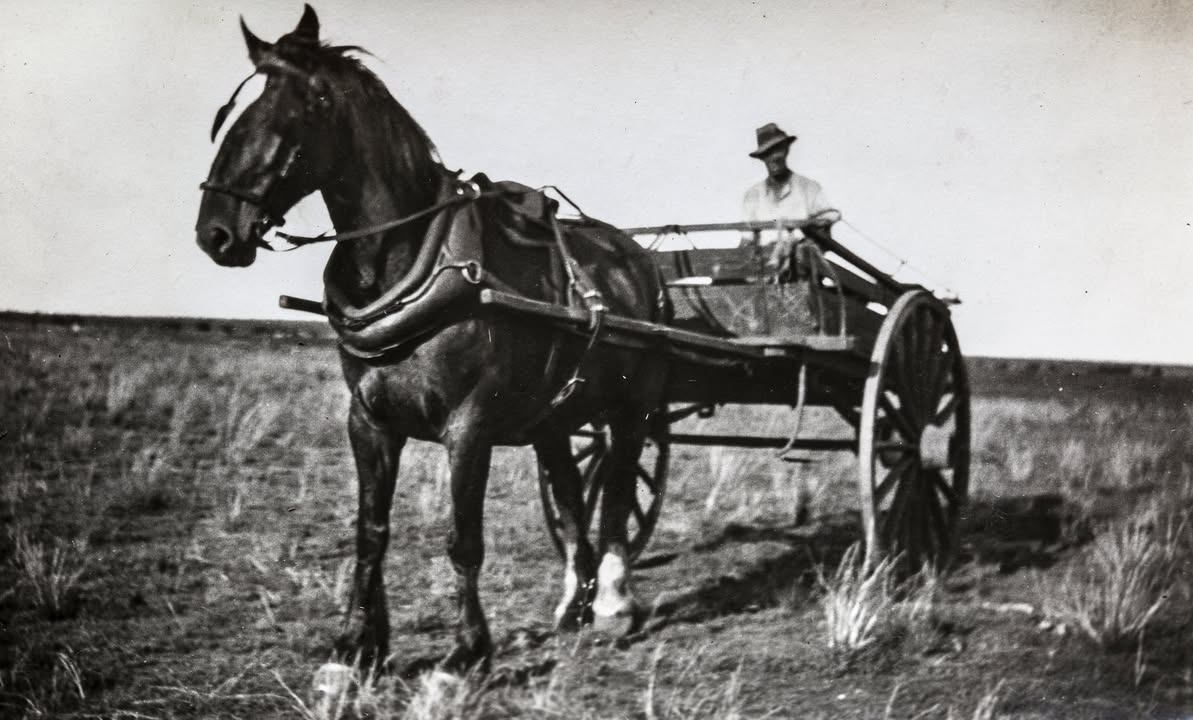
Images: Private photo sent in by Brent – it’s his grandfather working on the Barrier Highway between Cobar and Wilcannia, NSW. c1930; 1920c. WW1 soldier settler of Monash S.A., Amos Cook with horse and cart. From Alison Halupka’s Monash collection, via Tam Weller, great granddaughter.
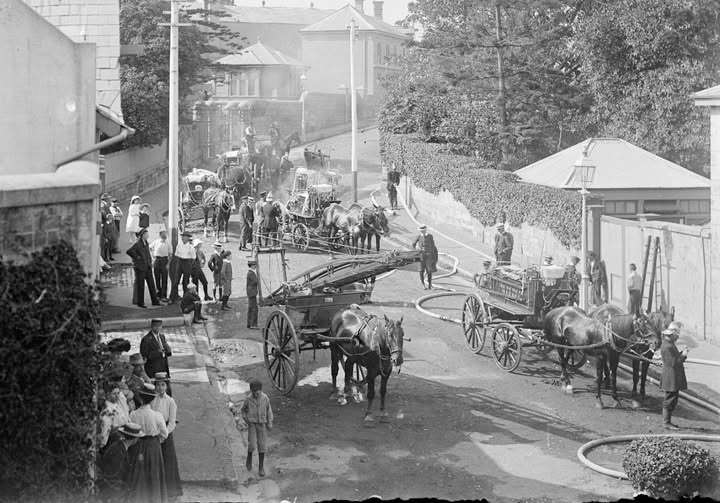
National Library of Australia
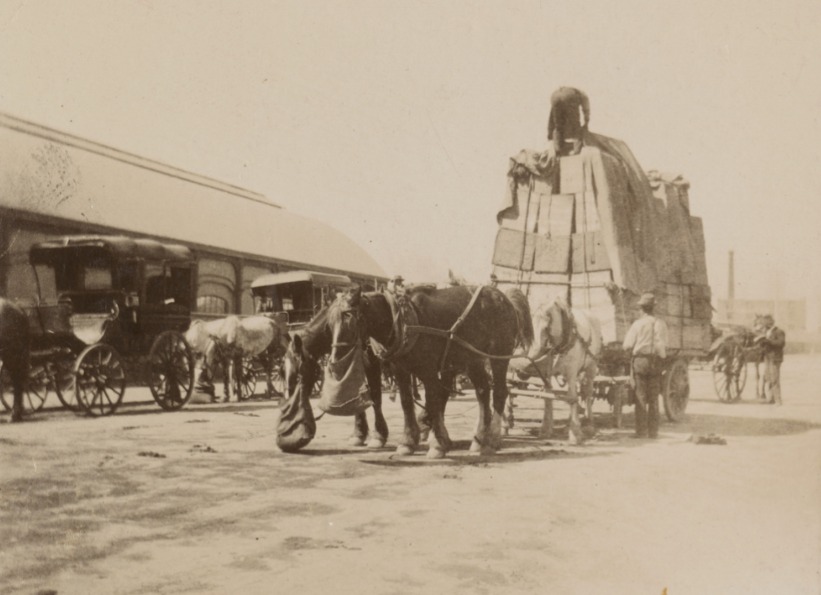
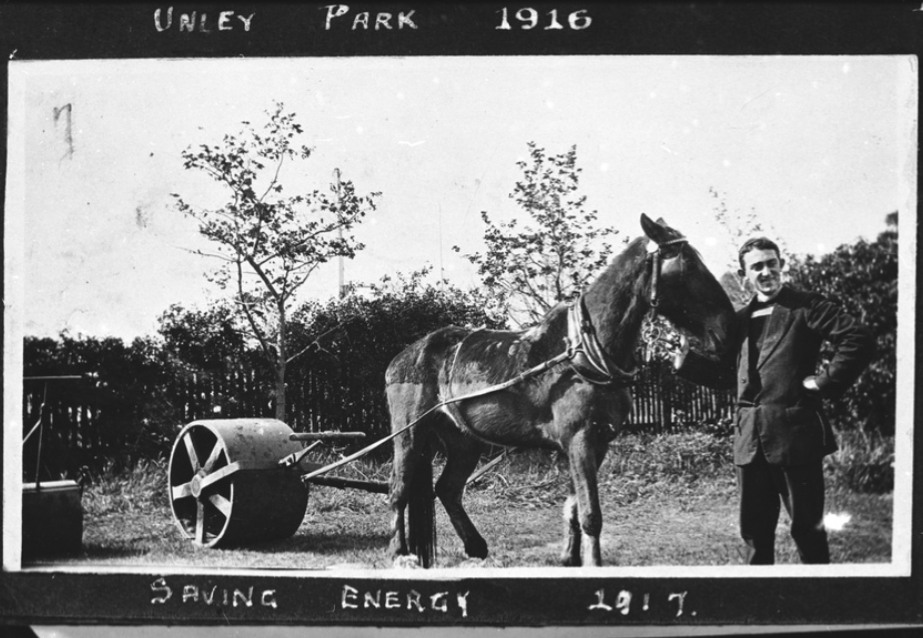

Images: Record load of tea being pulled by horses which were loaded with 75 six foot cases, in front of Smith Channon’s at Lipson Street, Port Adelaide. Each case contained about 140 pounds of tea. 1900. State Library SA; W. B. Clark with a horse and a Unley Council Roller reclaiming a tennis court in the 1914-18 European War years. 1917. State Library SA; J. S. J. C. D. Loading Fish Baskets. Bairnsdale Wharf. 1890. Museums Vic
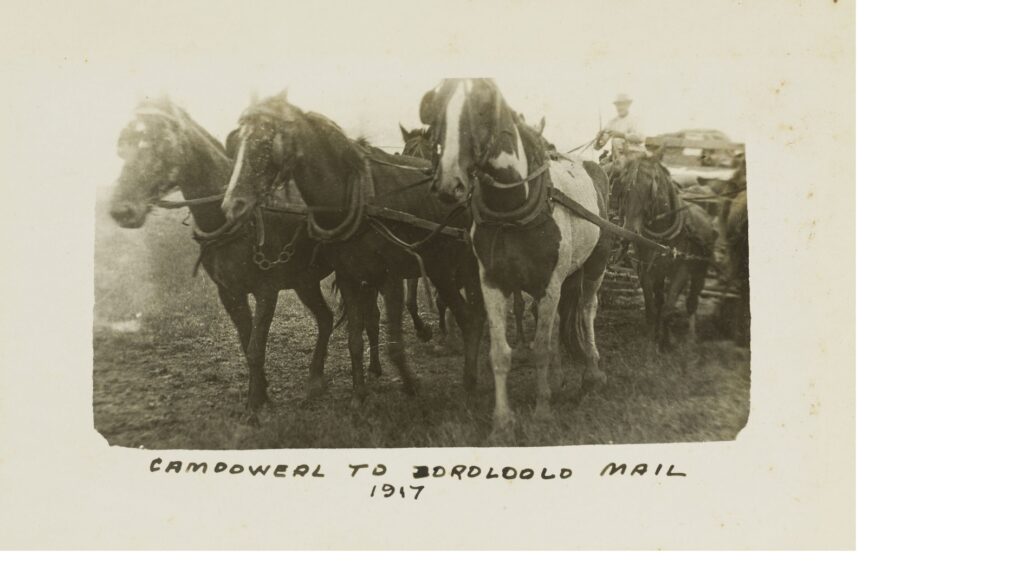
Photo by James Broadbridge State Library Qld
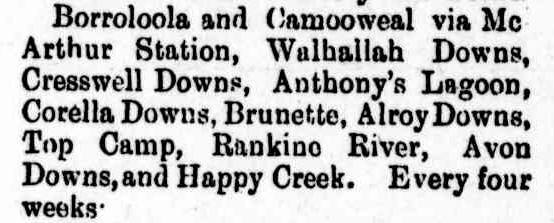
A big mail route, Camooweal being far west Qld, Borroloola top end NT. At times had to be held up due to flooded rivers, often 4 rivers needed to be swum across. Presume at these times the vehicle was left behind.

City of Vincent Libraries, W.A.
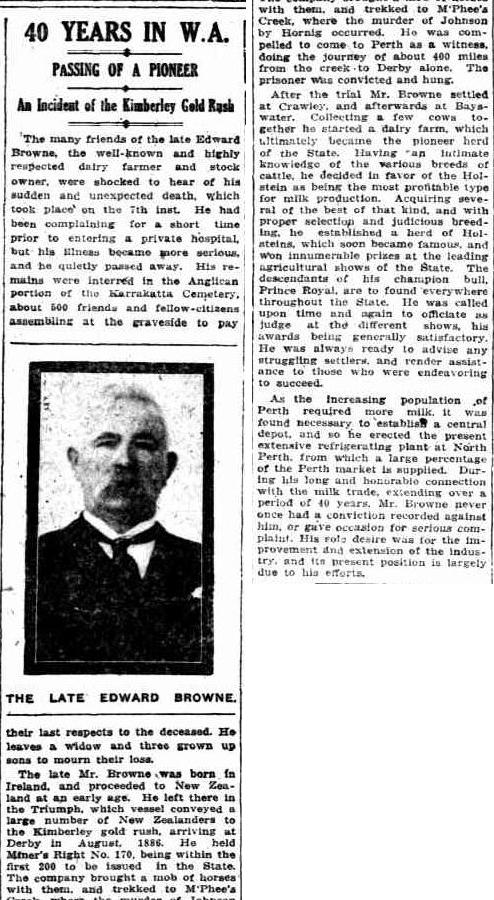
Browne’s is the oldest dairy in Western Australia. Founder Edward Browne was a tough adaptable man, originally from Ireland, who worked hard. At present Browne’s is up for sale, having been sold to foreign owners a few years back, it’s hoped the iconic dairy will return to Australian hands.
Image: Sunday Times 26 September 1926
A recollection from one of our followers Raymond Fuller: ‘Interestingly I had a friend when I was 9 years old whose father was a partner in a family business that used to milk a herd of cows at Harbord , just north of Manly NSW. This was 1950 and they had stopped milking in the 1940’s due to urbanisation. The massive milking shed was then used to house a cool room, feed and harness room and the carts. There were 3 brothers and a brother-in-law delivering on three rounds using horse and carts. The carts were the big iron tyre type with bulk milk tanks in the bed and the rest was holding steel crates of glass bottles so, loaded, they were quite heavy as the runs were on some very steep roads. The horses were stabled and fed oats and chaff. There were 4 horses, one, which belonged to the brother (was also named Blue) who did the relief deliveries knew all the stops as did the others on their own runs.’
!['View of station hands mounted on horses, at mustering and lamb marking, Mutooroo Station. Left to right: Jimmy McKenzie, Bill Somerville, Owen Maily, Charles Ryles, [unknown], Old Ned, [unknown], Jack McKenzie, Tom Huran, Jack Rowe, Andy Huran, Tommy Horfe, [unknown], [unknown]. 1898.' Photo by Keith Mcpherson Smith State Library S.A.](https://walerdatabase.online/wp-content/uploads/2025/08/View-of-station-hands-mounted-1024x526.jpg)
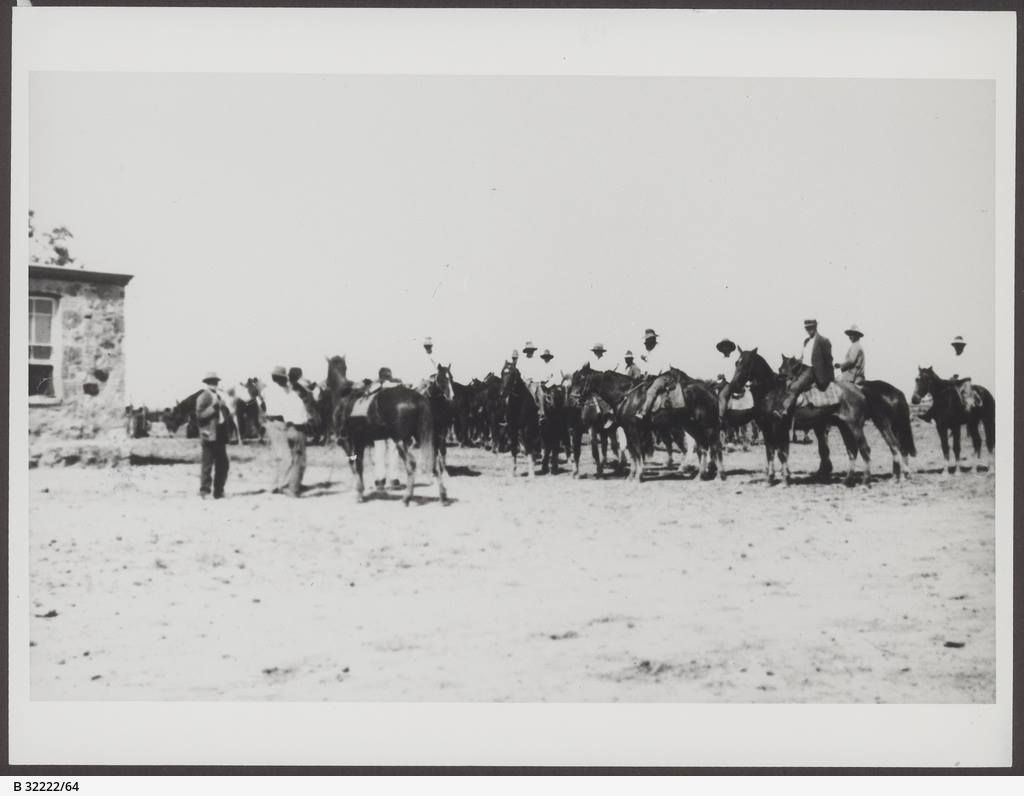
State Library of SA Images: View of station hands mounted on horses, at mustering and lamb marking, Mutooroo Station, 1898. Photo by Keith Mcpherson Smith; Men and horses ready to go mustering, Innamincka station, 1920.
In this modern era, Kent Saddlery which still travels to stations, takes wonderful photos of station staff, one day these will be treasured too. Kent Saddlery are on Facebook, a tremendous old family business, Australian.
Charles White owned Pikedale Station, 25 miles (40 k) west of Stanthorpe – bought by his Dad in 1890 from Donald Gunn. Charles improved the station constantly, it was much admired including flower and vegetable gardens around the homestead, shaded walkways and ample water to all paddocks. He ran cattle, sheep and horses. He was very hospitable and most VIP’s visiting the area stayed or dined there including the Governor.
He was a good horseman and usually travelled to town in a buggy drawn by four matched chestnuts. In 1894 he imported a Thoroughbred stallion from England. He showed horses including at the Brisbane Exhibition. To add a little heft into his horses he bought eleven mares, all in foal or with foal at foot, from the Weinholt draught stud in 1908 paying almost 1,000 pounds. By the 1920’s his horses were good strong Waler types, utility horses. He got good prices as the horse trade was still going, and local sales sound (a pic in comments).
In 1904 and 1905 when Japan bought tens of thousands of horses from us, Charles sold them some, and also 33 good bulls to the Japanese government in 1905, (Angus, in those times called polled Angus as they weren’t that common).
He was generous and donated ten good horses for the Boer War, in February 1900. In 1917 he donated 5 good bullocks to the Repatriation Fund, to help soldiers returning home. He constantly made donations to good causes.
In 1916 he donated 43 acres of good land to the Crown for returned soldiers. He held several fund raisers for the war on his property. No doubt he donated horses to the war too. In 1917 142 horses ran on the property.
After WW1 he was instrumental in getting the War Memorial built for Stanthorpe, donating the land for it.
Images: Queenslander, 5th April, 1924; Charles Frederick White, SLQ photo.

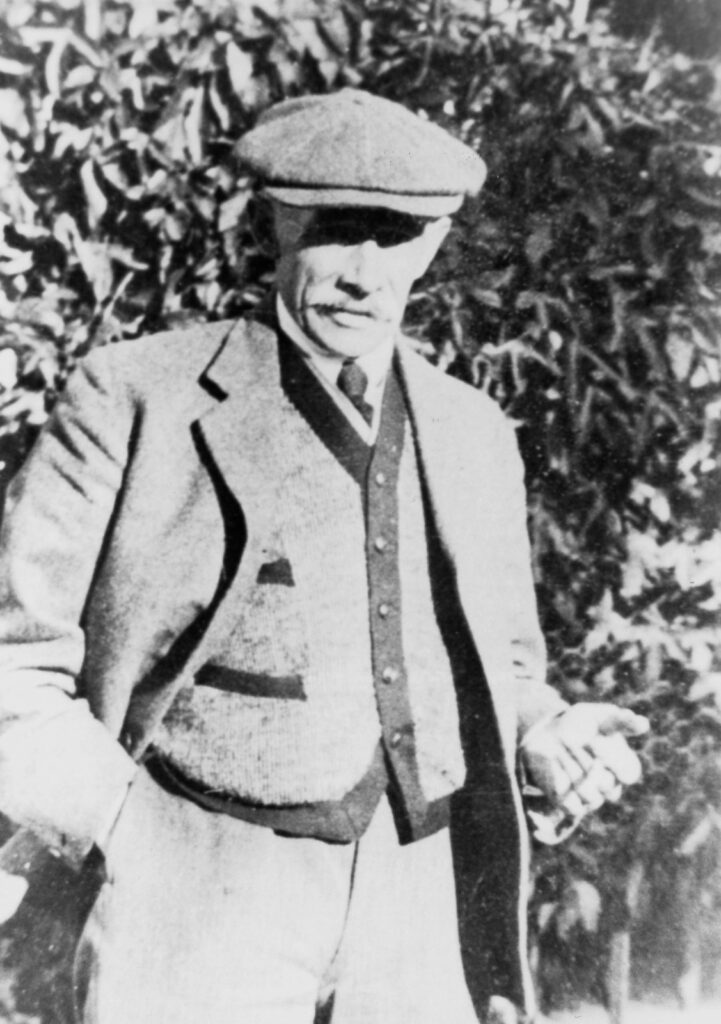
SLQ photo.
In 1918 Charles sold up, to A. Rogerson, who carried on the horse breeding, Rogerson also liked a good horse and was still riding into old age. He moved into Stanthorpe (for some years he was President of Stanthorpe Show) where he passed away in 1940 aged 74.

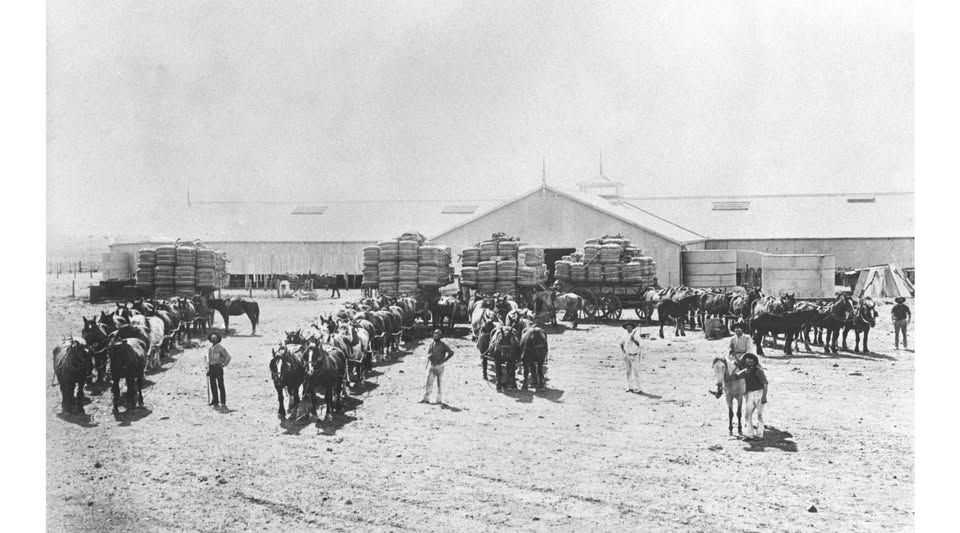

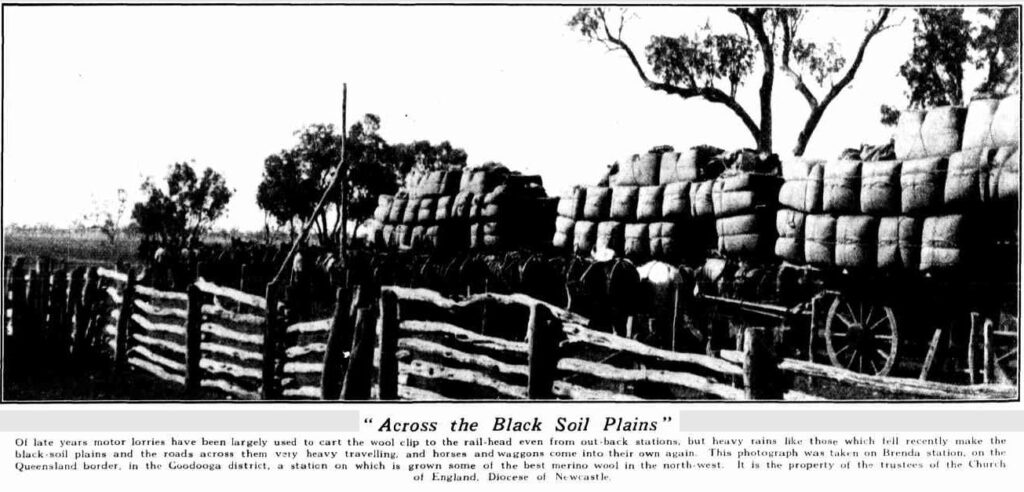
Images from State Library of Queensland: Horse teams ready to move out with their loaded wool wagons, Brenda Station, ca. 1890; Photo from the Sydney Mail, 25th October 1933. Wool still leaving the station by horse teams.
Brenda Station is in NSW, 18k nor-west of Goodooga, on the Culgoa River – the station crosses the NSW-Qld border. It was first taken up as a station in 1840. The large shearing shed can be seen in the photo. They also ran some cattle. In 1895 they shore 102,362 sheep, less than usual.
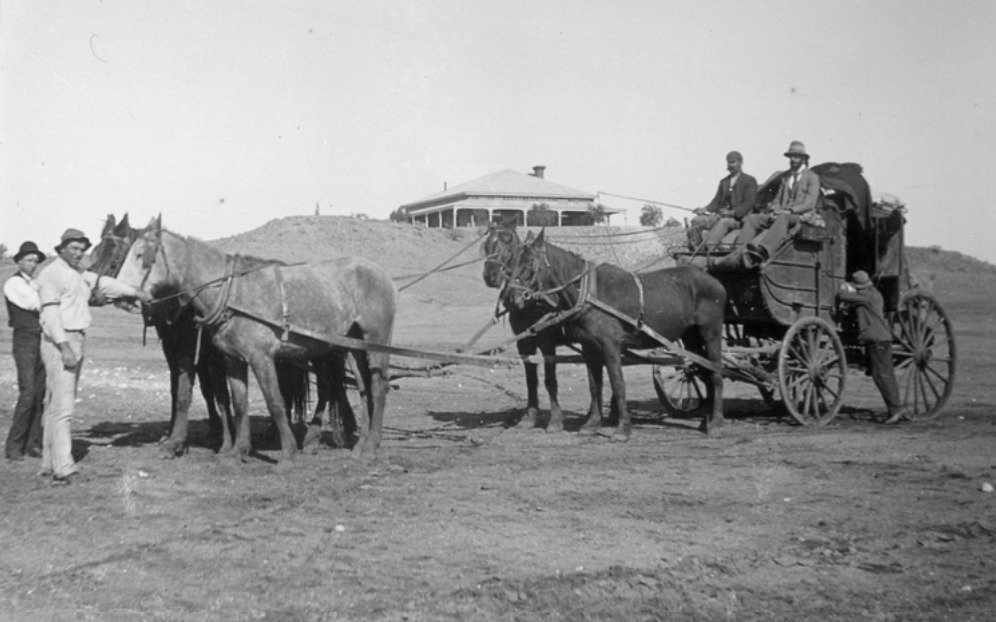
Murnpeowie is 96k east of Marree, 102k nor-east of Lyndhurst, South Australia. This mail run was part of the longest mail run in the world. There were several sections of the run, to link mails: Farina to Murnpeowie 144 k., Murnpeowie to Box Flat 96k., Box Flat to Innamincka 240k.. Three coaches were used, one for each section. The coach left Farina 6 a.m. on Sunday. Mt Lyndhurst, Murnpeowie, Blanchewater, Tinga-Tingana, were some of the stations along the way to Innamincka. Another contract was given for Innamincka via Cooper’s Creek to Haddon Downs 225k.. Cordillo Downs was also on the mail run.
From Mt Hopeless to Burkett’s Woolshed in dry times (often), camels were used to carry both mail and passengers. As well as no water, there was no feed for horses there. Camels also took mail to Cordillo Downs when water was scarce.
Horses, camels, bullocks and large donkeys were used on the station e.g. carting wool and wood. Bore water was vital as dams on Murnpeowie dried up in drought. Camels and donkeys were very useful at times horses could not cope due to scarce water.
A few items from news clippings…
1906 the mail contractor for this run was Mr. Pearson, he drove the coach too.
1910 the contract Murnpeownie – Farina mail run was won by J. McConville and G. Black for 120 pounds per year, to be done once a week with horses (horses being the fastest on a mail run).
1910 the coach Murnpeowie to Innamincka was driven by John McLennon, but in August, 150 miles from Farina, the coach overturned, John was thrown and his leg was broken. A buggy from Murnpeowie took him down to Farina for medical attention.
1911 a passenger described the mail coach road as very rough, Murnpeowie to Farina – he’d travelled on the mail coach from Cordillo Downs to Farina – the toughest mail run in the country. Wells provided water along the way but the Murnpeowie water was brackish. Passengers stayed at stations along the way, such as Mount Hopeless, and were well fed by the station on these stops. Horses also changed. It was an 8 day trip. Link in comments as it’s a good description of the journey, including a boat over the Darling.
1913, tragedy – the driver of the mail coach, William (Bill) Martin, was struck by lightning and killed while in camp on the station, he was standing by a corner of his tent watching the storm. Bill did the coach run from Murnpeowie to Farina. He left a wife and six children.
1914 The coach driver occasionally rescued men in the middle of nowhere with no water, sometimes these poor fellows lived, but at least one (William Arthur) died soon after in the coach, despite being given water and soup, by the driver, William Butler. More often they found bodies. The drivers stopped to mark the place with a cross, and reported the deaths on arrival at Farina.
Needless to say, floods at times halted coaches for a time either from bogging (usually about 18 hours spent digging it out making the mail late) or waiting for waters to recede. More often drought conditions prevailed.
The horses were always praised, indeed, some men at times travelled to Blanchewater, by 1911 the station buildings and yards sadly falling to bits, simply to see where the famous TE branded horses many of them had ridden, came from. Thomas Elder’s horses went to India and all over the place, extremely handy and tough stock horses too, as did those from most of these stations including Murnpeownie which also bred for India as well as providing tough coach horses to mail contractors. in 1900 a mob of colts was taken from Blanchewater to Cordillo Downs.
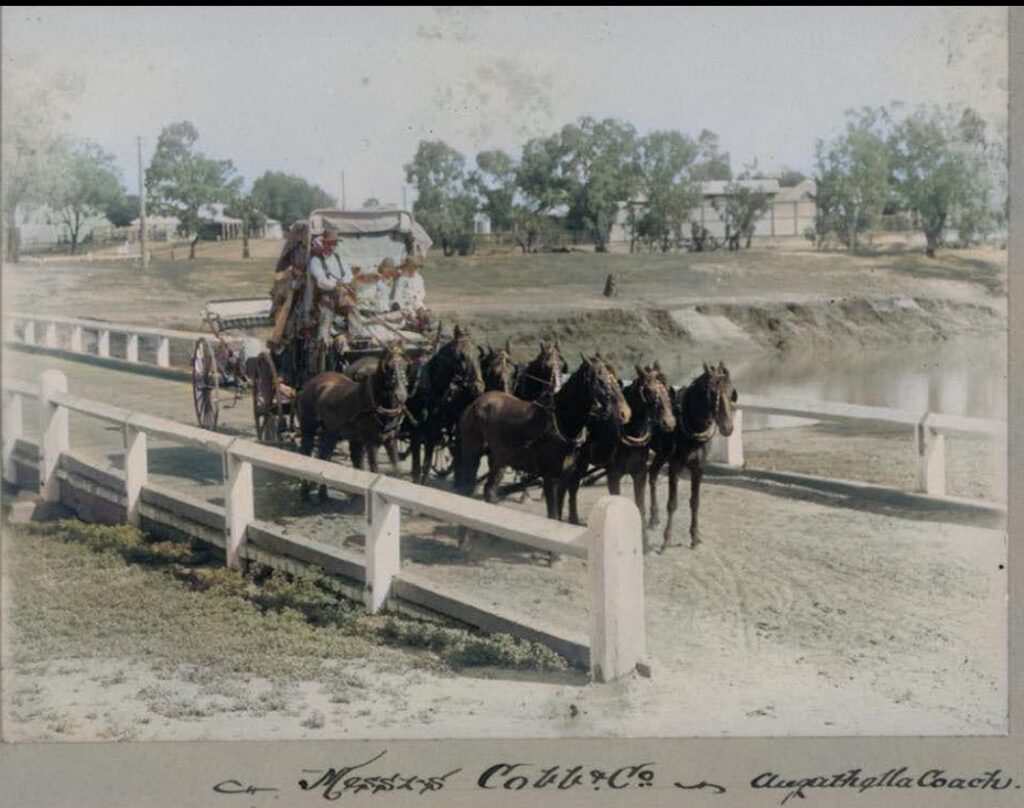
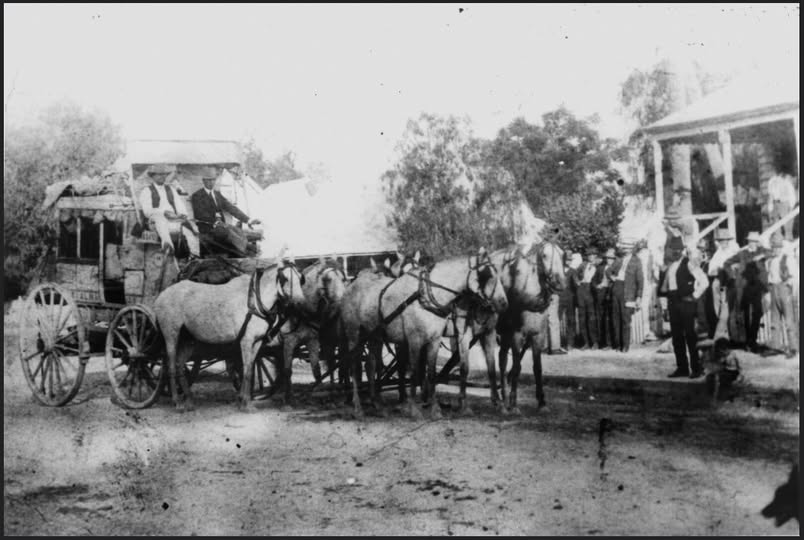
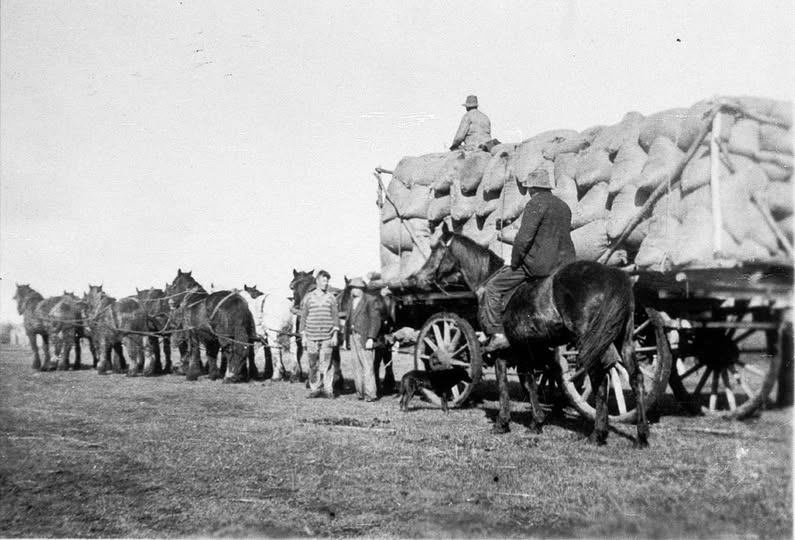
Images: Cobb & Co. coach arriving in St George, Queensland in 1910. The seven-in-hand horse team pulling the Cobb & Co. coach as it arrives in St George. A large group of spectators has turned out to see the coach in front of the old St George post office. State Library of Qld, via Flickr; Alf Hobbs’ horse team carrying wheat – Temora, NSW, 1930. State Library NSW

Yarraman is about 120 k north of Toowoomba. The rail went through to the busy little town in 1913. Many teams of bullocks and horses were based in the greater area for timber getting.
The big pine mill at Yarraman owned by the Queensland Pine Co., processed mostly hoop pine – Araucaria cunninghamii – native to the area. The timber was loaded onto a train to send to Ipswich and Brisbane, the mill opened 1912 in anticipation of rail, building its own siding – in 1912 employing 100 men. Other mills also went in.
Over 130 teams regularly brought timber to the Yarraman mill, and a hardwood mill was built in the Benarkin forest, sometime before 1920.
Lucrative cedar was also found in the area too, in fact the local pub was named The Cedars. Wells and Crawford had a saddlery and boot shop there. Several stores.
The forge was obviously tremendously busy. In 1914 the blacksmith was Thomas Fitzgerald, he had a good set up for making tyres for wagons (of metal). Two blackmith’s shops (forges) were operating there in 1920. In 1928 a blacksmith there was Thomas Cislowski; in 1933 Mr Rodey built a blacksmith’s shop there. In 1936 mention of Thomson’s blacksmith’s shop there being improved.
Horses also used on farms there, maize, potatoes, peanuts were grown; some selections were soldier-settler blocks, and a couple of drovers operated from the area.
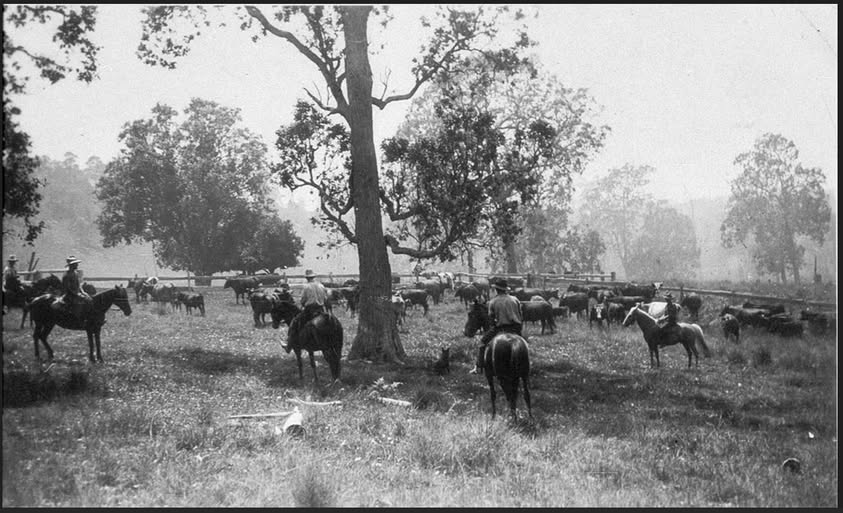

Images: Mustering cattle on “Willi Willi” property – 35 miles west of Kempsey, Upper Macleay, NSW, State Libary of NSW (undated, probably 1940s)
McIver’s ran a dairy farm at Willi Willi property, milking over 100 head. The thick bush had been cleared by famous bushman, Michael (Mick) Mainey who mostly sold cedar for a living; however the bush got Mick as a falling tree cracked his skull and killed him in 1937 on Willi Willi – he was 89 years old.
Image: John Edward Buckley at his woodyard, Chelsea, 1924. Museums Vic
‘Jack had been a driver with the 4th Australian Field Artillery Brigade, they had long freezing months in France and Belgium (pic in comments). He enlisted in 1915, returning home 1919.
He employed several men at his woodyard, as it gained plenty of work. Chelsea is now a Melbourne suburb, 30k from the city centre – in those times however a separate town.’

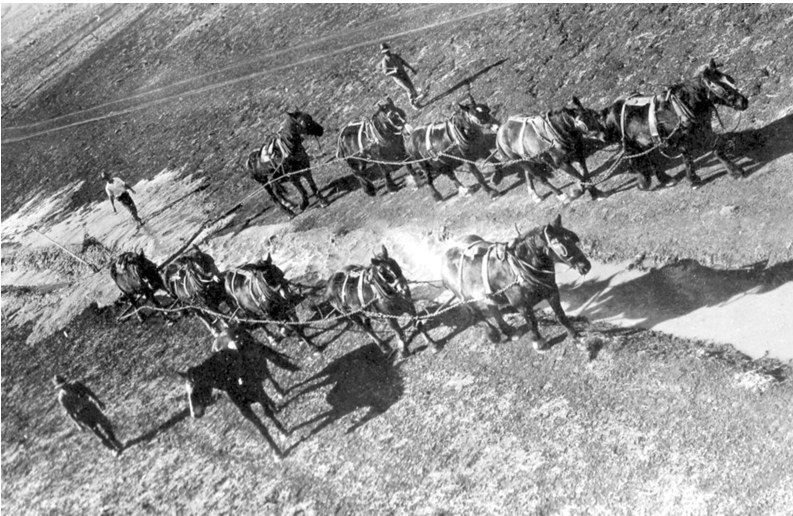
‘A black and white image of a team of horses delving a bore drain on Ensay Station, probably in the 1910s. The men in this photograph have not been identified.
The photographer, Amos B. Watts (“Wattie”), whose images are usually identified by the initials “ABW” on the bottom right of his photographs, was a jackeroo and photography enthusiast who worked on several stations near Hughenden in the 1910s and 1920s including Cameron Downs, Lerida, Ensay and Landsborough Downs.’
Flinders Shire Historical Photograph Project
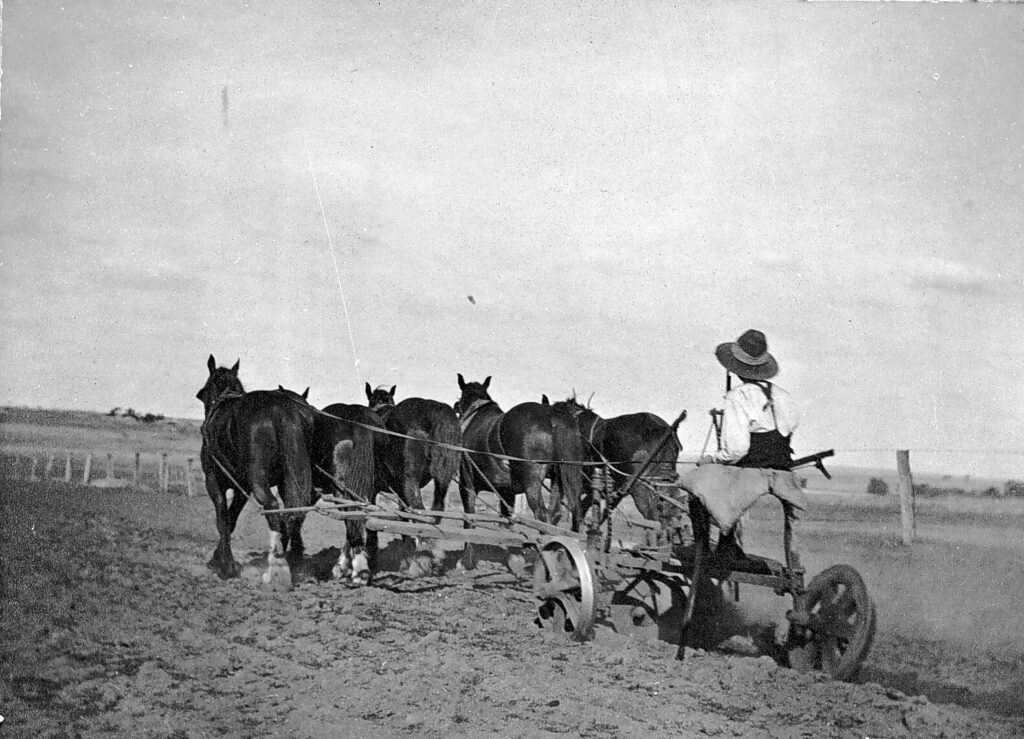
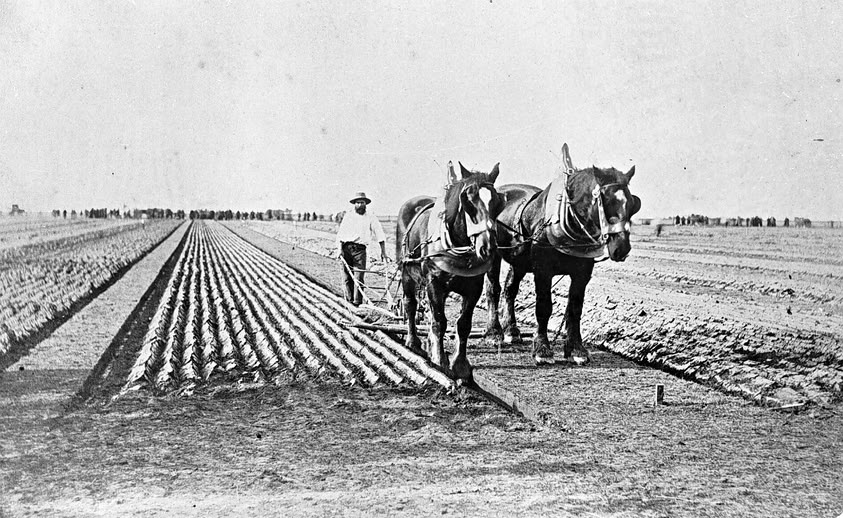
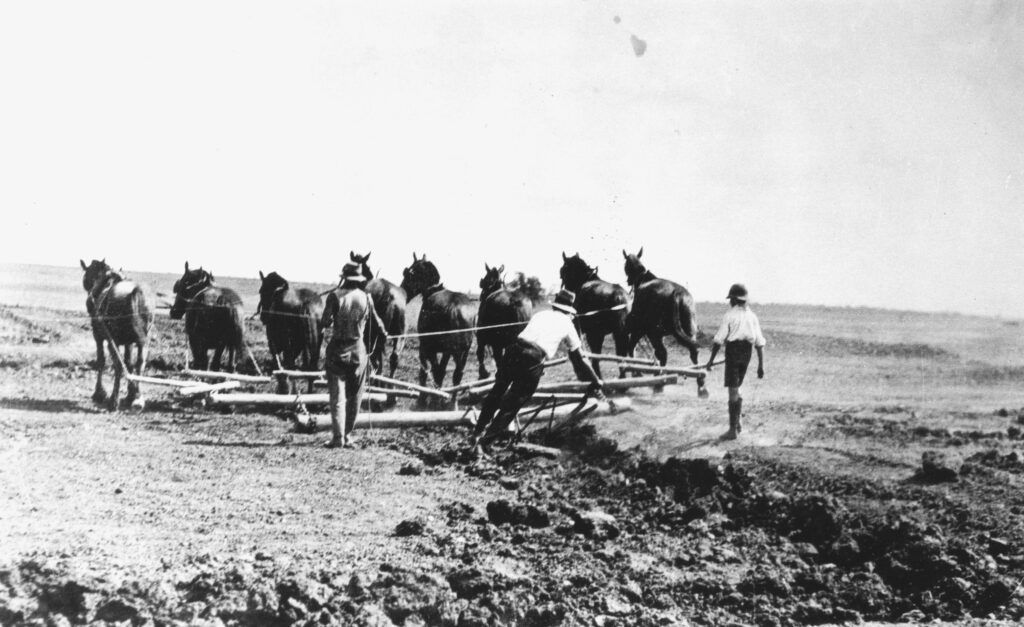
Images: A young boy driving a plough. He was 14 years old. Mount Hope, Victoria, 4th November, 1919. Identified as Kenneth McGillivray. Museums Vic; William Ross ploughing a straight furrow in a ploughing competition, Werribee, 1872. Museums Vic; Ploughing a straight furrow behind an eight horse team, Roma, ca. 1935. State Library Qld

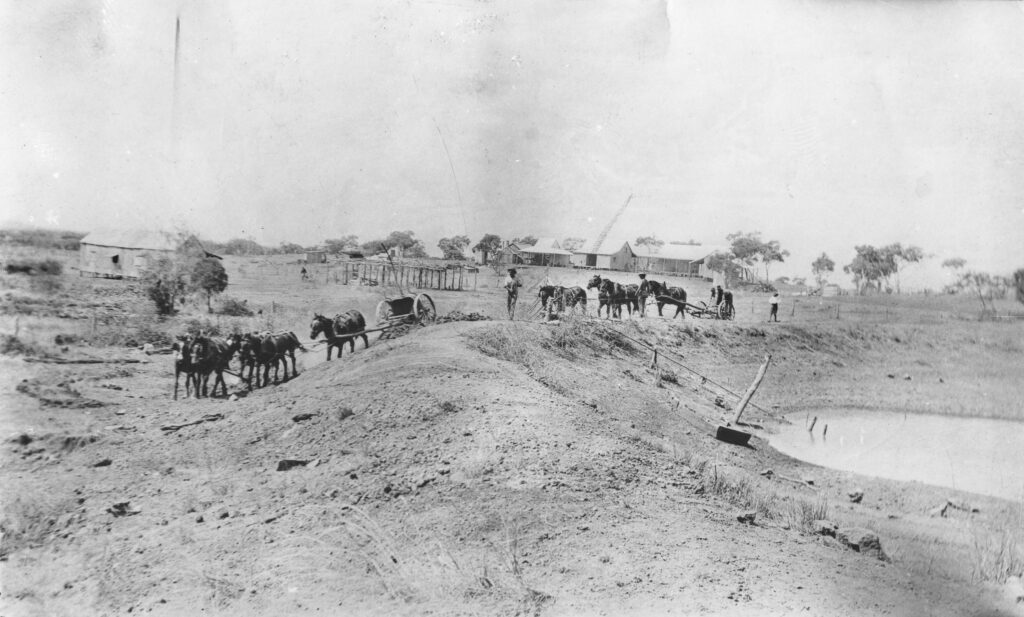
State Library Qld Images: Three furrow plough being used to excavate a canal on a farm, Queensland, 1930s. Department of Public Works collection; Tank sinking at Donor’s Hill Homestead, Gulf Country. 1920’s.
You can find other posts about working horses, such as this one, by searching our website.
