
Daisy Bates

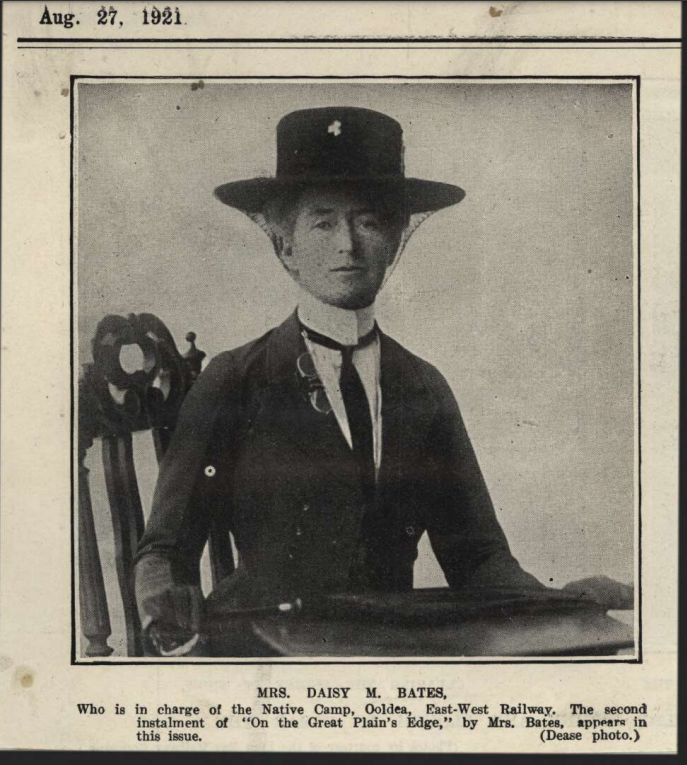
Waler Data Base @ Facebook. Image: National Library of Australia
Amongst other incredible achievements, Daisy Bates rode 3,000 miles side-saddle, taking 770 Hereford cattle from Lake Eda in the Kimberley of W.A. to her own run also in W.A., spelled, then taken on to Peak Hill, NSW. Her young son was also on the droving trip.
An interesting character, she had to develop survival skills although was not a confidence trickster like her first husband, Edwin Henry Murrant – who later changed his name to Edward Harbord Morant. Harry, to his familiars.
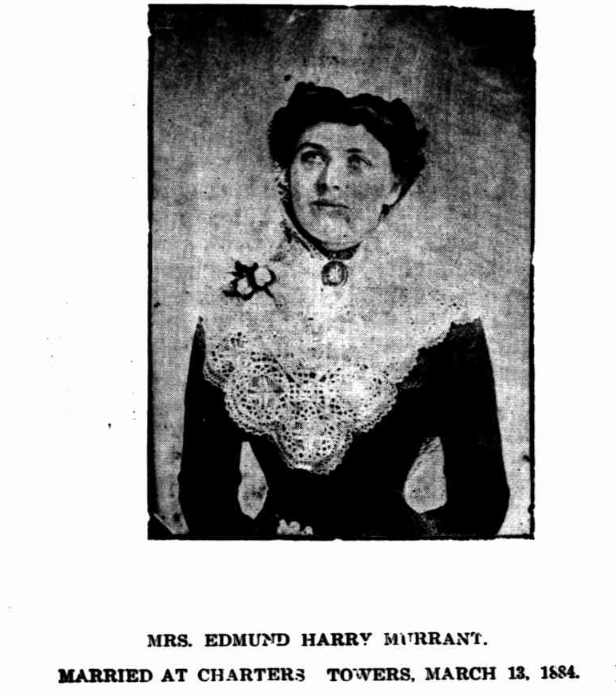
Image: The North Queensland Register 21st April 1902
Daisy and Edwin Murrant married from Fanning Hill station near Chartres Towers, Qld, on the 13th March 1884. She was the governess. He was the breaker. Both were “new chums.” They hadn’t met before.
She was from a poor Irish family of Tipperary, raised by a step-mother after her mother died. Her name was Margaret Dwyer but she was known as Daisy. She arrived here in 1882. Murrant was from a single parent family in England, giving himself cache by claiming to be the illegitimate child of nobility or an Admiral. Although both acted as gentry at least they were literate, despite their poverty.
Murrant cleared out less than a month after the marriage with stolen goods including money conned from a padre, plus two horses and a saddle paid for with a dud cheque signed “Moran;” stealing more goods along the way including 32 pigs. He was caught that time near Cloncurry. The clothes of a dandy and good boots always caught his eye; he stole to fulfil his desires. One man he traveled with was never seen again but Murrant – now Morant – turned up in South Australia three months later wearing the missing man’s particularly good riding boots. We’ll leave him there. Daisy never saw him again after he cleared out.
Then, not divorced, in February 1885 she married Jack (John Thomas) Bates, a drover of NSW. In 1886 she bore him a son, Arnold, her only child – but long before that was separated. In Sydney Daisy next married Ernest Hilyard Baglehole, in June 1885. He was a ship’s officer on ships going to and from England – they met before she migrated. his family forbade the marriage. She hadn’t gained a divorce from Bates, who was away droving constantly, and Baglehole was married to someone else too. They soon separated however. Daisy returned to Jack. She had a son soon after. It’s often been conjectured if Bagelhole was the true father. After some years she and Jack separated.
Daisy had grand airs, spoke beautiful clear English, was petite and always carried a furled umbrella – the parasol of Victorian gentility. On a trip to London in 1891 she convinced the Times to pay her for journalism about the Australian Aborigines. In 1894 she put Arnold into boarding school, returned to London and worked as a journalist in London for five years, returning here in 1899. She’d saved enough to get a run in W.A., 183,000 acres on Ethel Creek, and took horses and a buggy from Perth to Port Hedland by ship, then drove them 800 miles to get cattle. After the long trip with cattle, she turned to writing for a living.
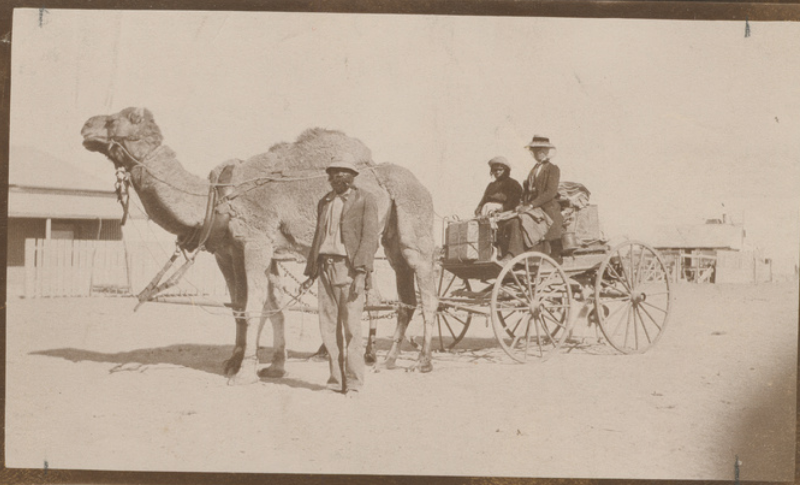
For the next forty years she wrote profusely – about the bush which was a best-selling topic in those times – and her passion, the Aborigines – recording much of their culture, languages, and wrongs done by white society. She was called kabbarli – grandmother. She helped the people with medical and other needs, funded by her bit of land in W.A. and her writing. She helped get Beagle Bay reserve set aside for the people there and her work on languages and clans has many times been used to determine land claims since. Eventually Daisy had to sell her station, and some land she’d bought in Perth to retire to; sold simply to get by. Next she sold her side-saddle and other possessions.
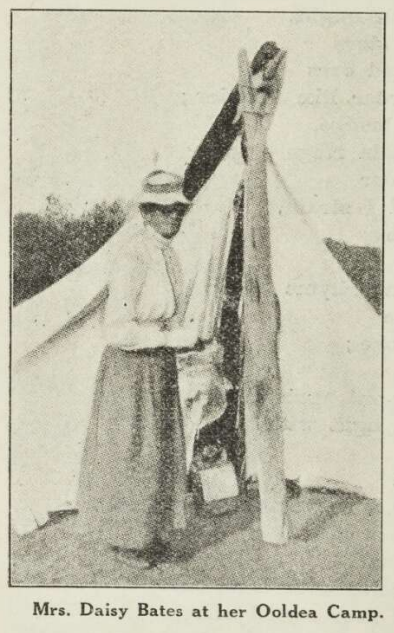
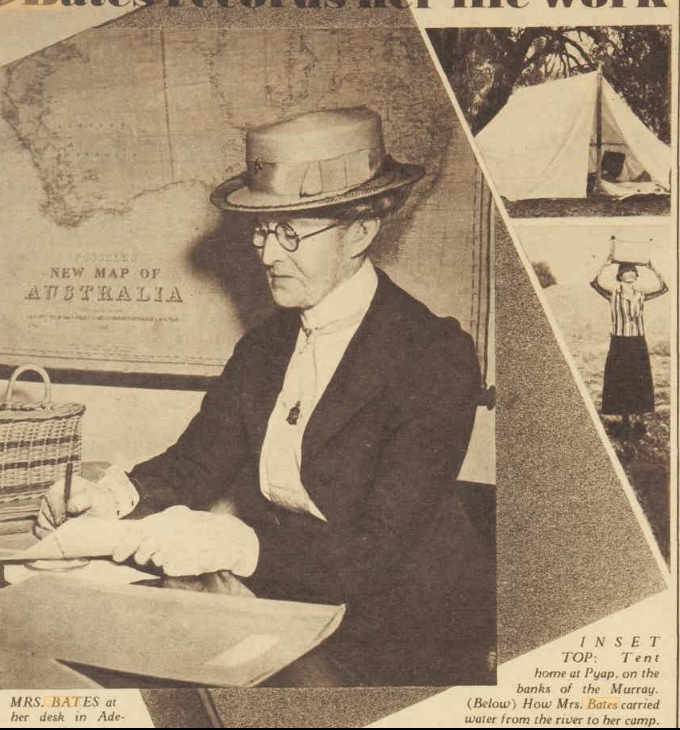
Images: The School magazine, June 4th 1938; The Australian Women’s Weekly, 28th September 1940
She didn’t do missionary work, not wishing to change anyone’s beliefs; nor did she use her Aboriginal friends as unpaid workers. By her prolific writings about the people she gained some official work – being put in charge of the Native Camp at Ooldea on the eastern Nullabor. Her writing and constant contact with scientists and anthropologists gained her more employment in 1910, as a Travelling Protector of Aboriginals. She did much good publicizing the plight of these people. However, the government abruptly terminated her contract in 1912.
In 1934 she got the Order of the Commander of the British Empire. She’d had decades of highlighting the Aboriginal condition and had ridden over a lot of country by horse, camel and camel buggy.
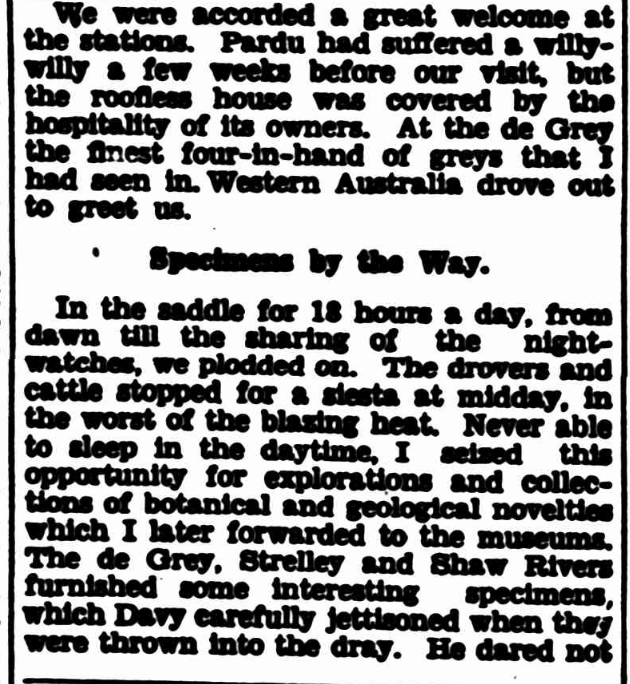
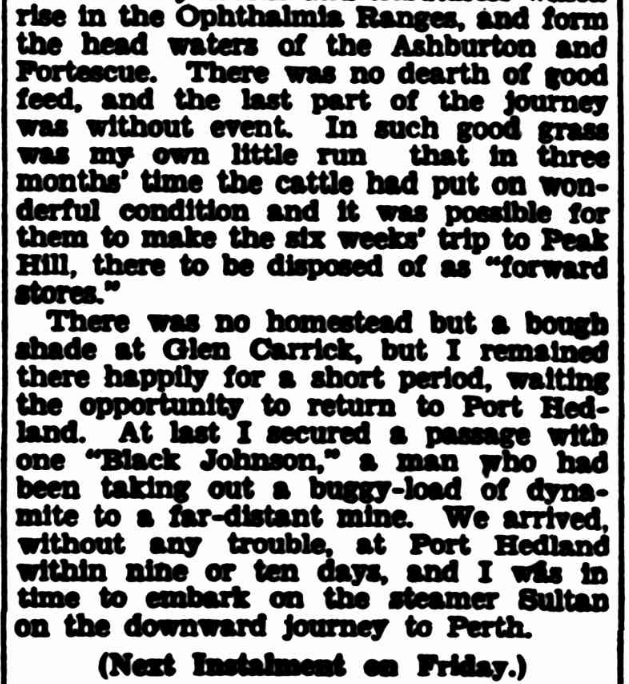
Images: The West Australian, 5th Feb 1936 (story previously published 1902 in the W.A. Record)
Her book “The Passing Of The Aboriginals” of 1938 had reference to cannibalism – denied by vocal opponents – this, sadly, ruined her reputation. (Edited as thought she lied about it but no! she was correct – see comments thank you Graeme!) Her work was incredibly detailed and honest so it would have been out of character to be untruthful. This book is much lauded, a true Australian gem.
Unpaid by the government – living on the Nullabor and other remote places, she was in dire poverty by her old age and almost blind. However in 1945 the government gave her 250 pounds plus paid her three guineas more than the normal old age pension, as she was used to helping her friends so much. By 80 she was still living in a tent, helping her Aboriginal friends. By 88 she was in a nursing home in Felixstowe but still writing; all her belongings in three small suitcases. She had a form of dementia caused by long term lack of balanced nutrition – basically a lack of vegetables.
When she died in 1951 in a Prospect nursing home she was penniless and wearing the same Victorian clothes she came out in, after a trip back to London in 1891. Her son had long been estranged from her; he was married, then moved to NZ in 1940.
Daisy (1859-1951) was a product of the Victorian age and a time it was exceedingly difficult for a woman to support herself. She managed mostly by writing, about the cause which became not just a living but her way of life; also about her bush experiences to get by.
Opinions about her vary. Her funeral was small, as there was condemnation over her claims (she was however right); but many Aboriginal people came from far and wide to the unveiling of her Memorial at Ooldea in 1954. And she did ride a heck of a long way for six months, side-saddle, droving cattle! Can’t find a photo of her on a horse. But there weren’t many cameras about in those times..
